INV
- CATEGORY Finance
- FOR Founders · Finance teams
- USES YOUR COMPANY CORE Organizations
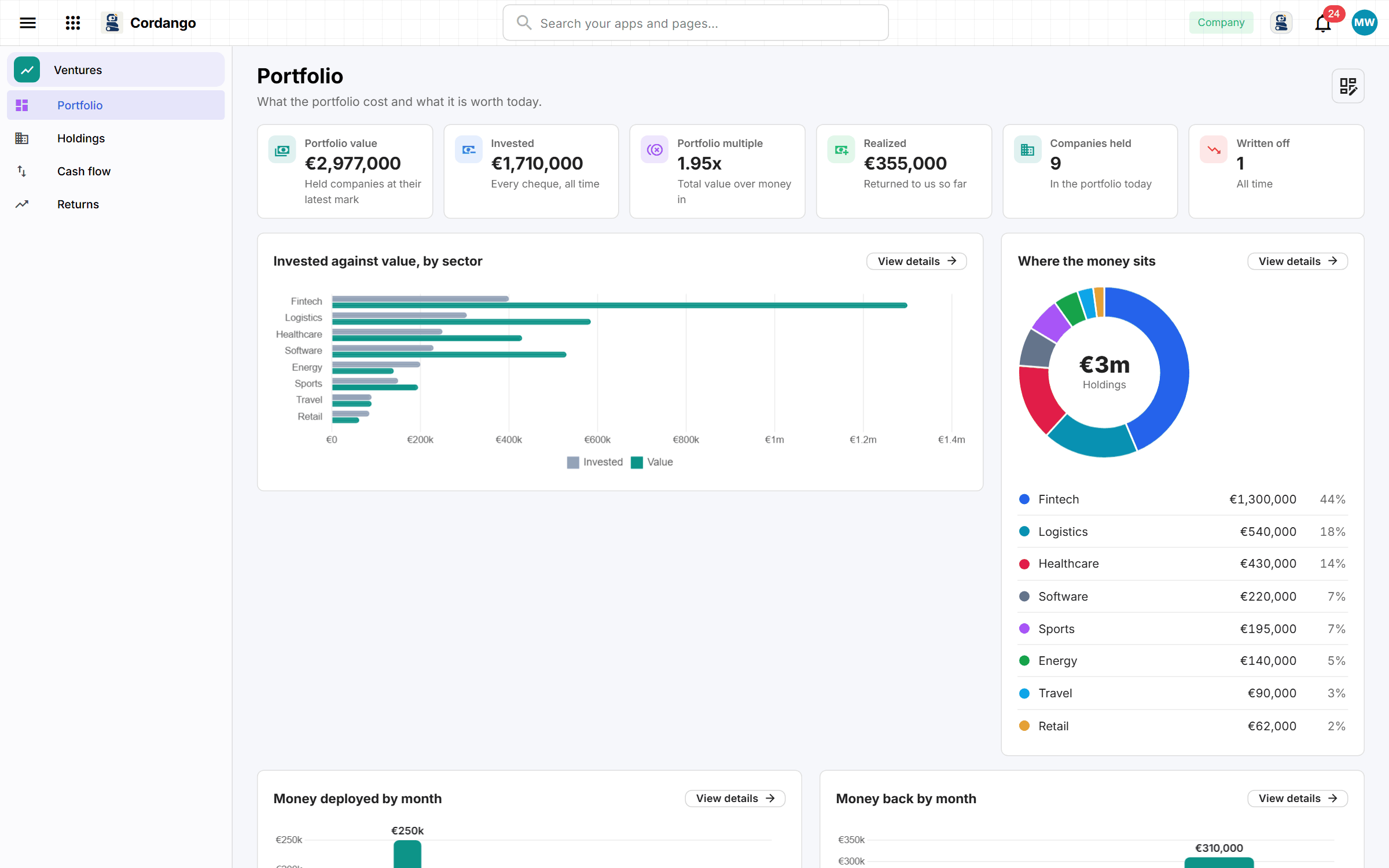
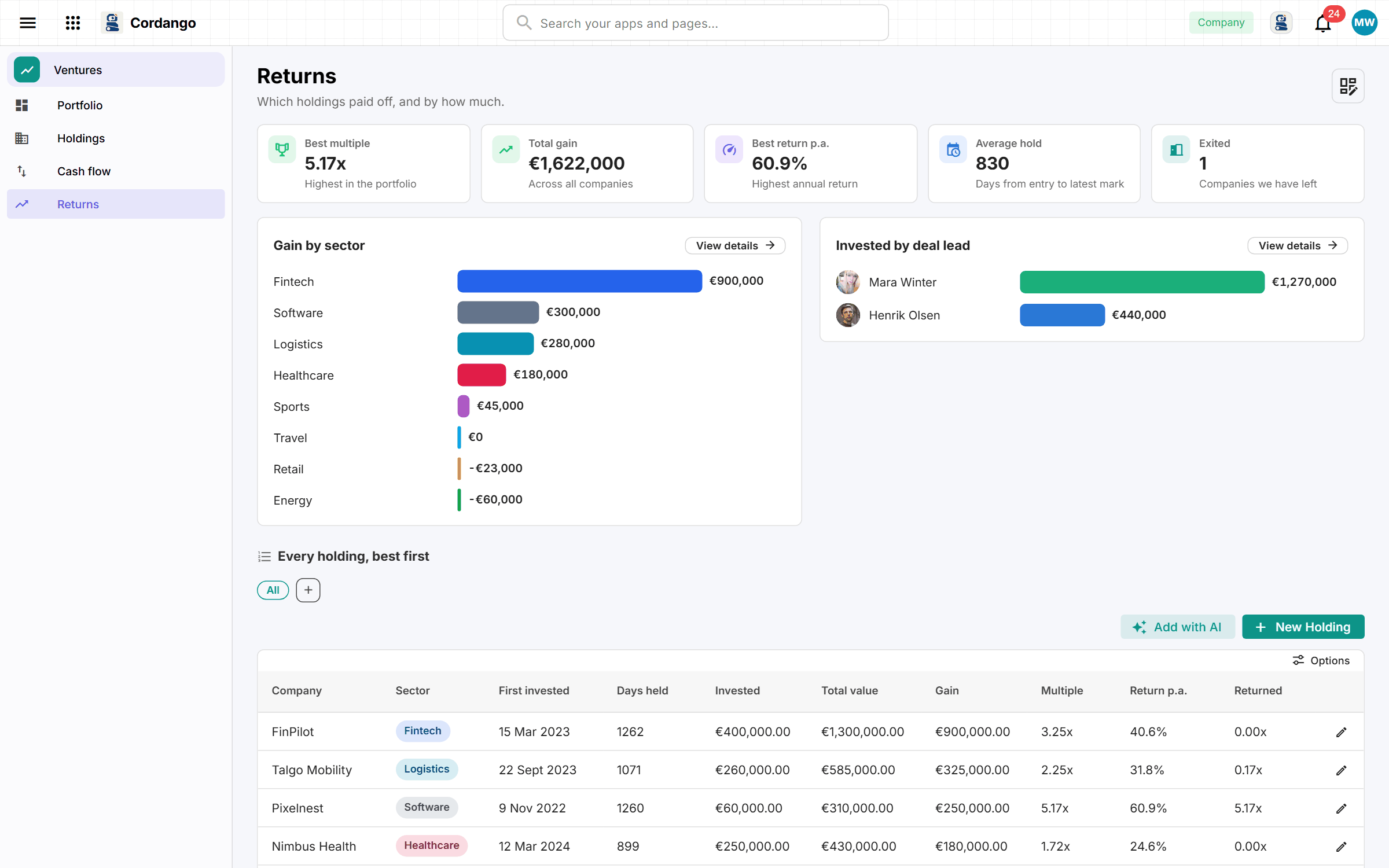
Founders who invest on the side, and companies that take stakes in their own clients, usually keep the record in a spreadsheet updated by hand. Each holding collects its cheques, valuation marks and the cash that came back, so today’s value has a dated reason behind it. Multiple, DPI and yearly return are calculated from those records, and the portfolio page totals value, invested and gain across the book. A company you hold is the same record as a client or supplier elsewhere in your workspace.
Use it to
Useful for
Every app here installs on its own and works on its own. Adding a companion is what makes both do more.
Every workspace already has these. Nothing to install, nothing to connect.
A company you hold equity in is the same record as a company you sell to or buy from, not a second list of names
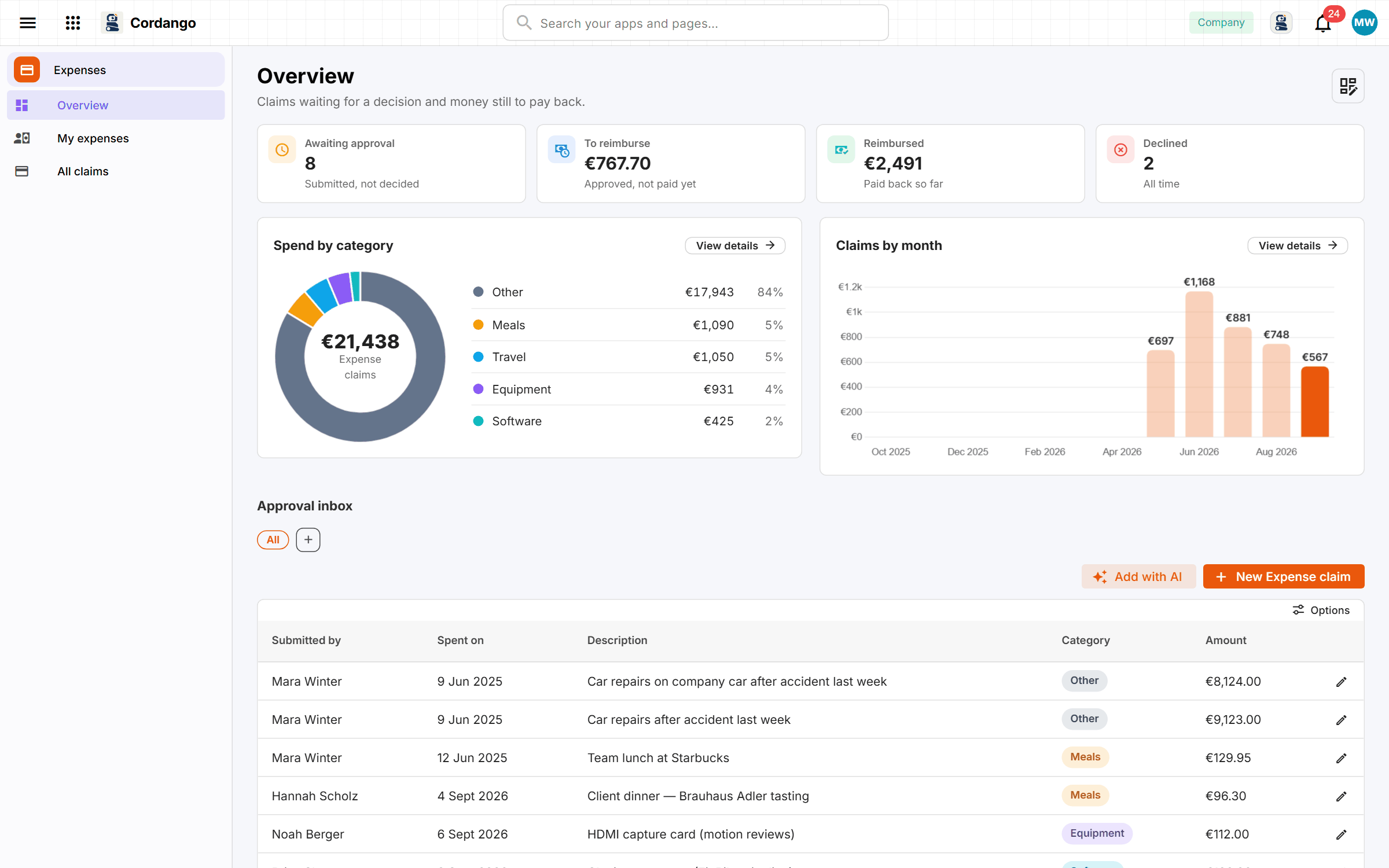
The colleague who paid for the team dinner on their own card files one claim with the receipt, and can see when it’s approved and when they’re paid back.
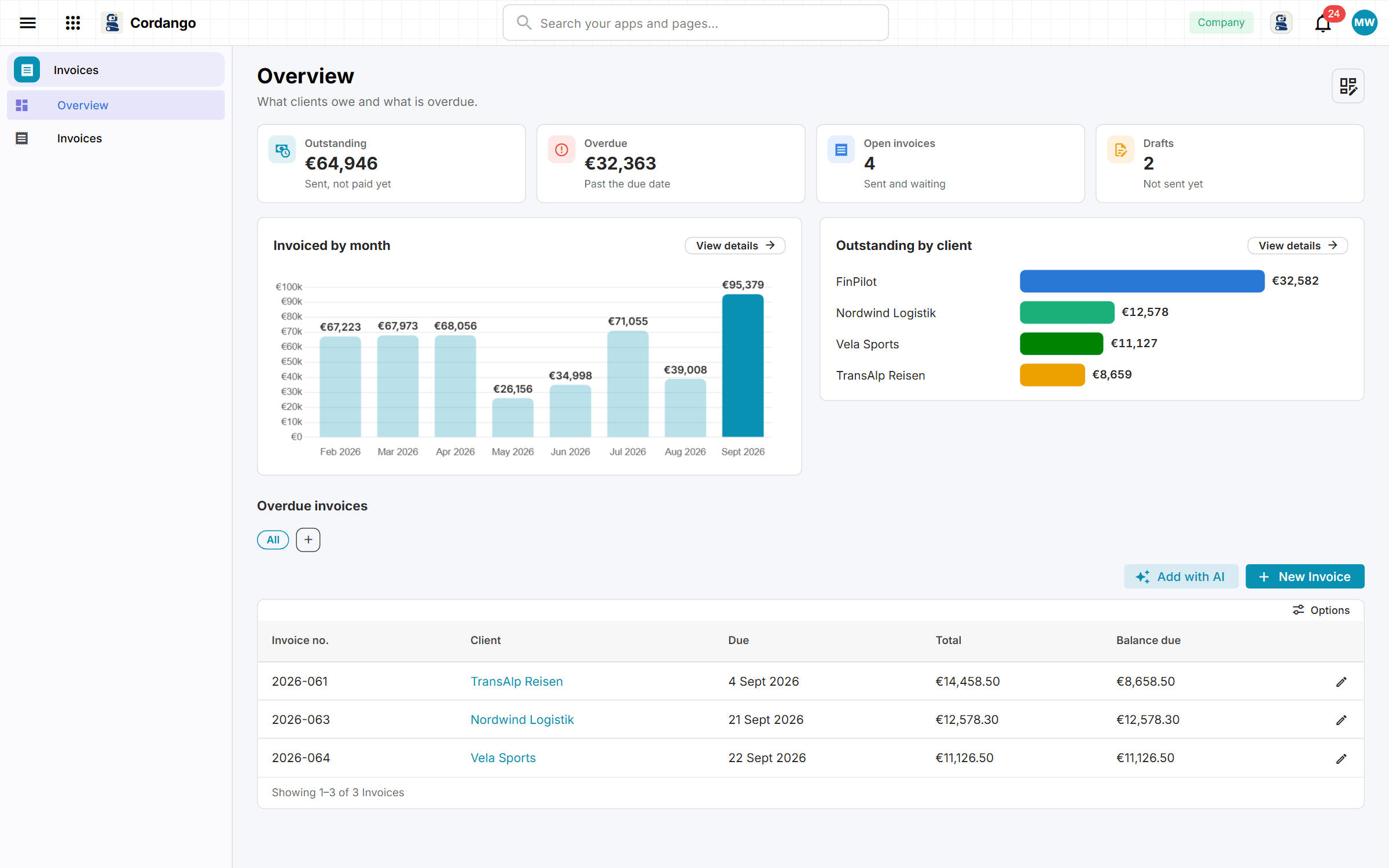
Invoicing for a small agency or consultancy, done by whoever gets stuck with it at month end. Totals add up from the line items, and late ones show how late.
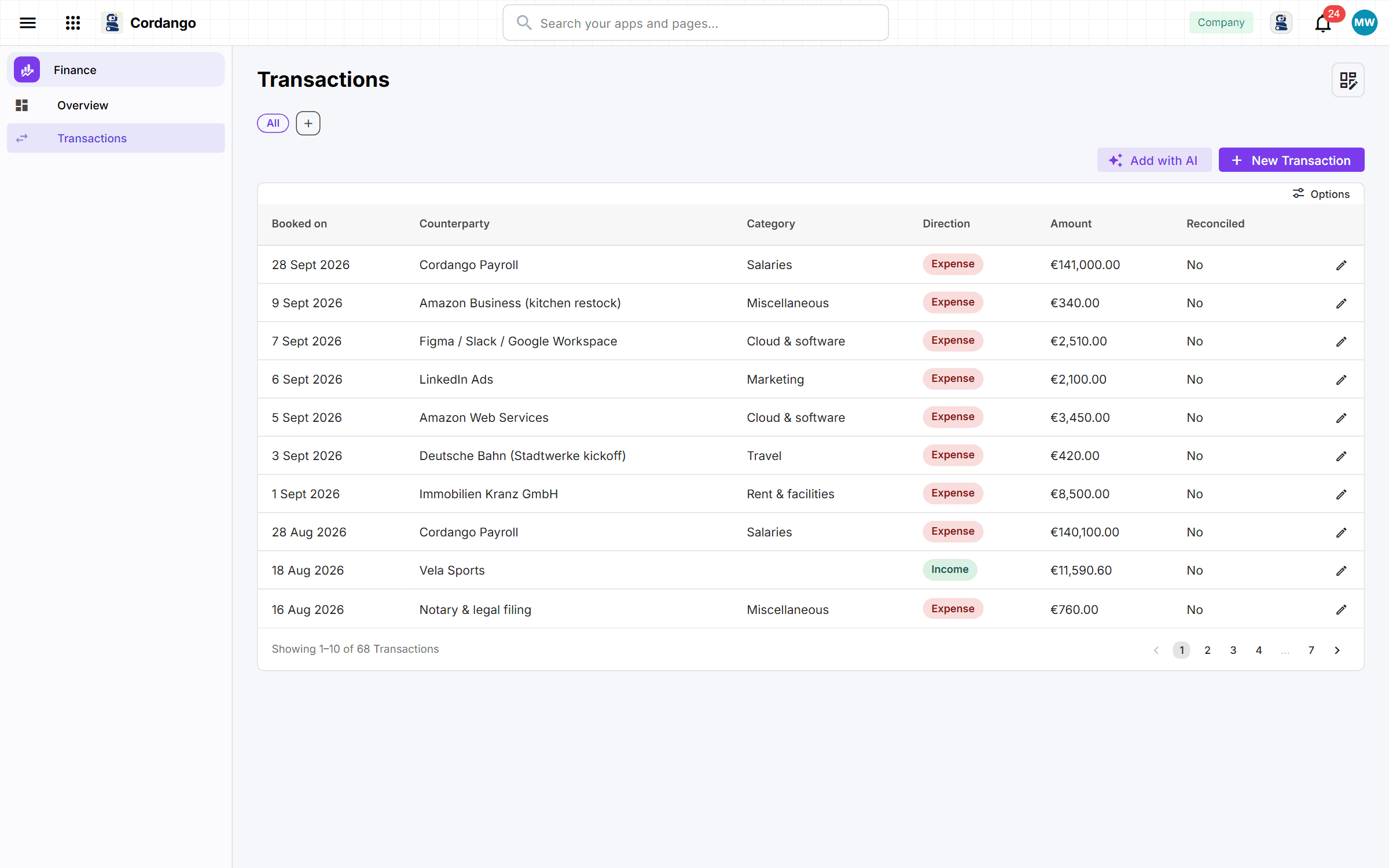
In a small company, somebody sorts the month’s money into categories before the accountant sees it. This is their ledger, and it shows where the money went.
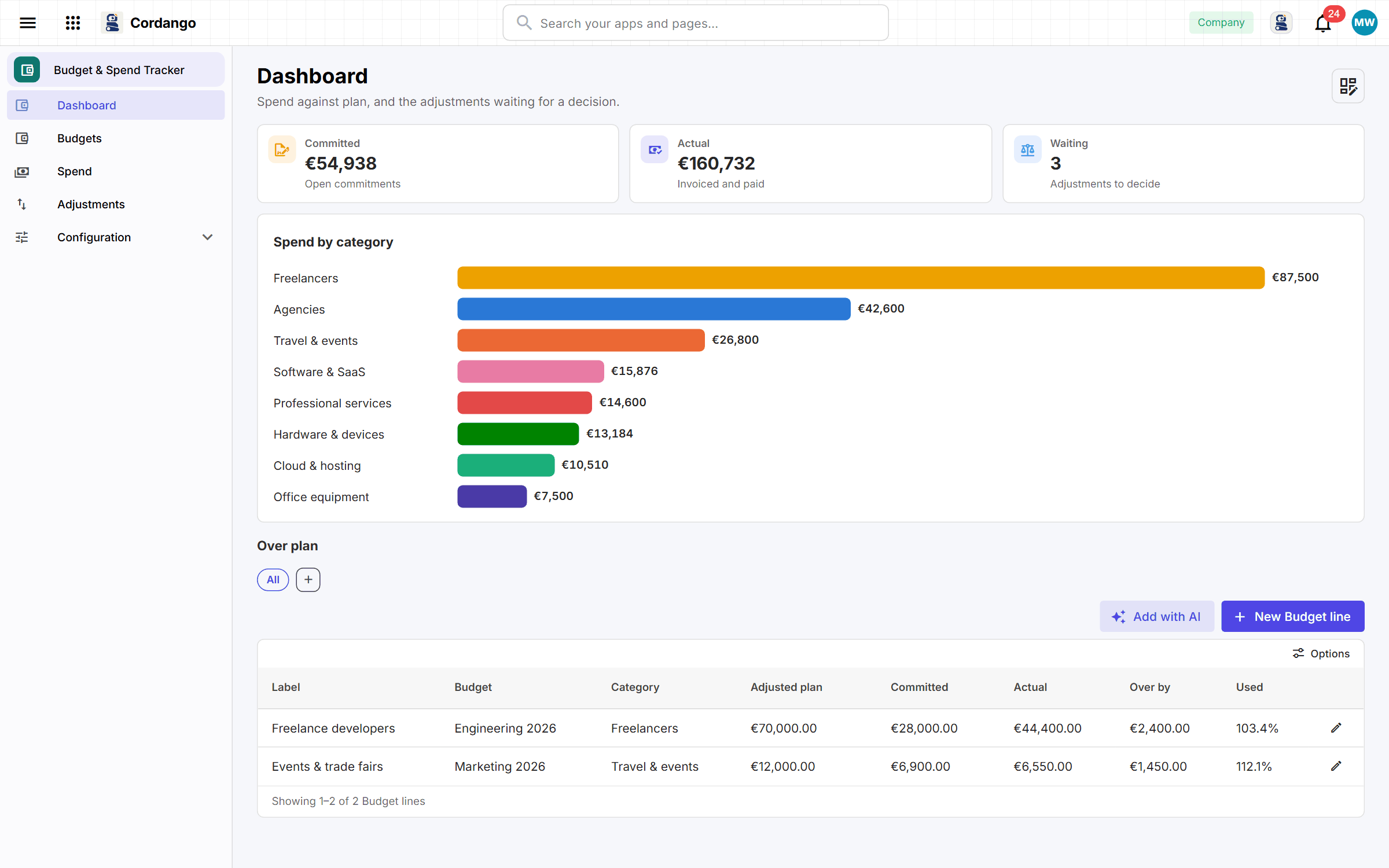
A department head shouldn’t learn at quarter end that the budget is gone. They hear on a Monday instead, because committed money counts before it’s spent.
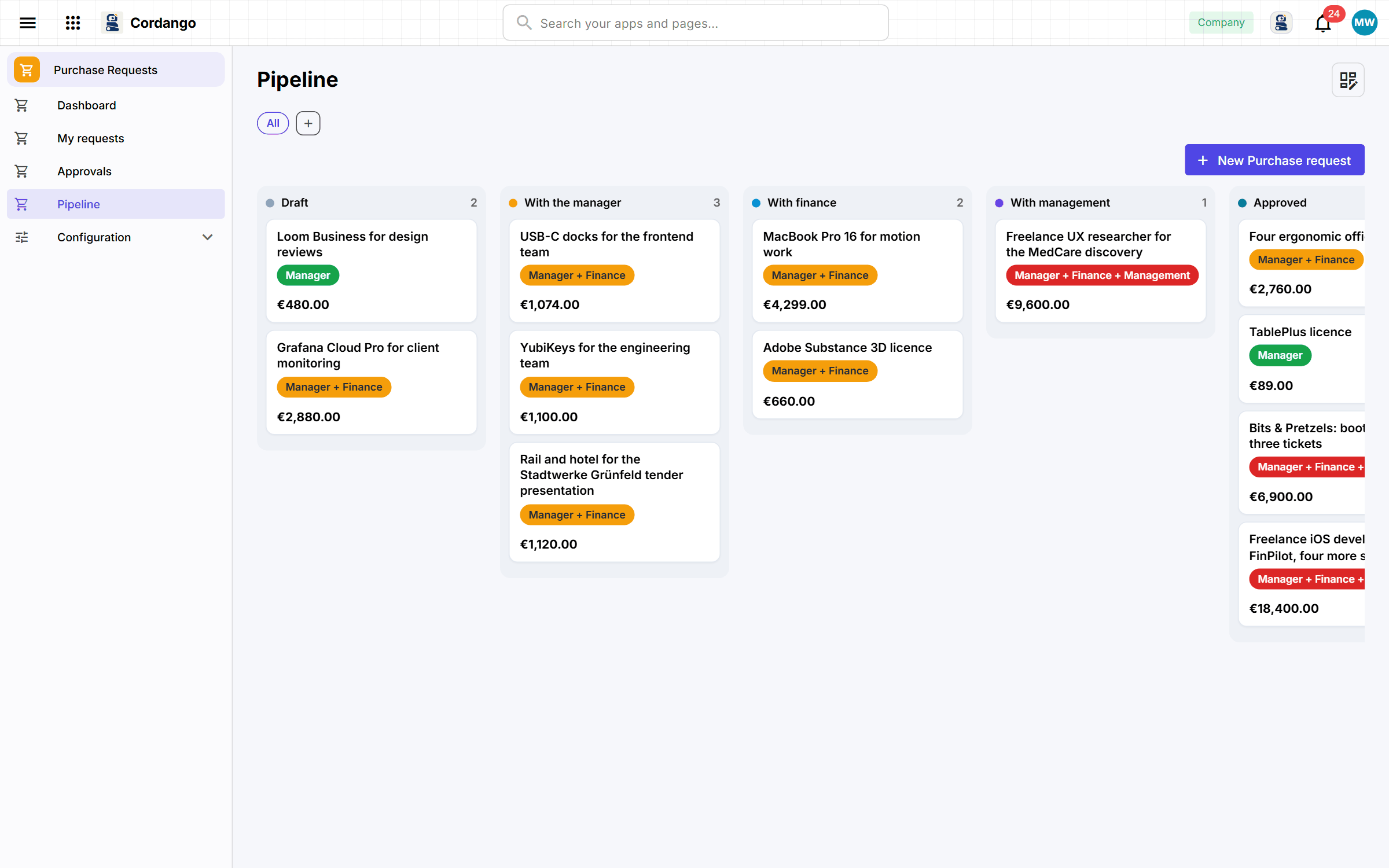
A short form for anybody who needs to buy something, and the amount decides who agrees. A new chair stops at the manager, a new server goes all the way up.
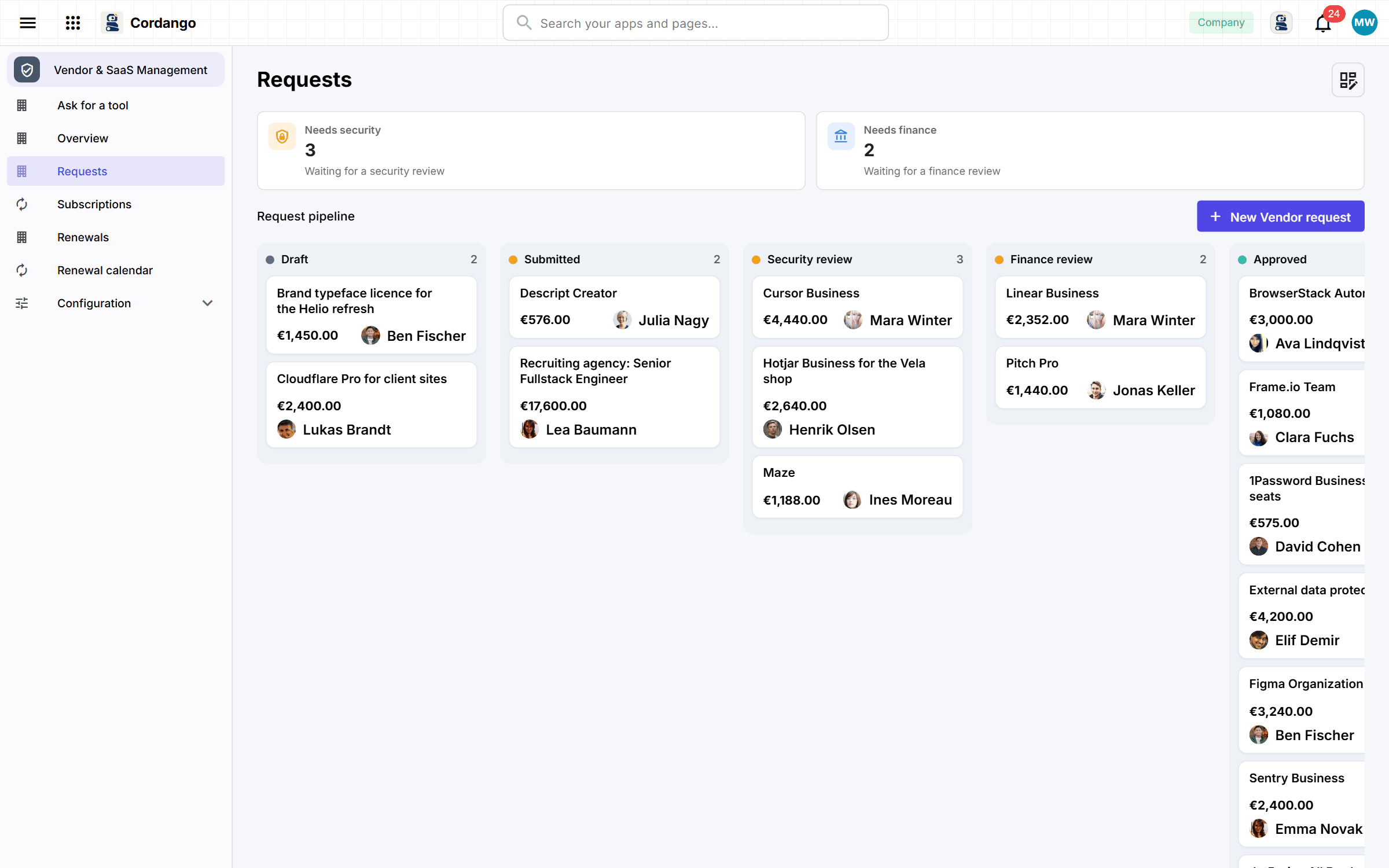
IT usually hears about a new SaaS tool when the invoice arrives. Here the request passes a security review first, and every renewal comes with a warning.
Every app here installs on its own and works on its own. Adding a companion is what makes both do more.