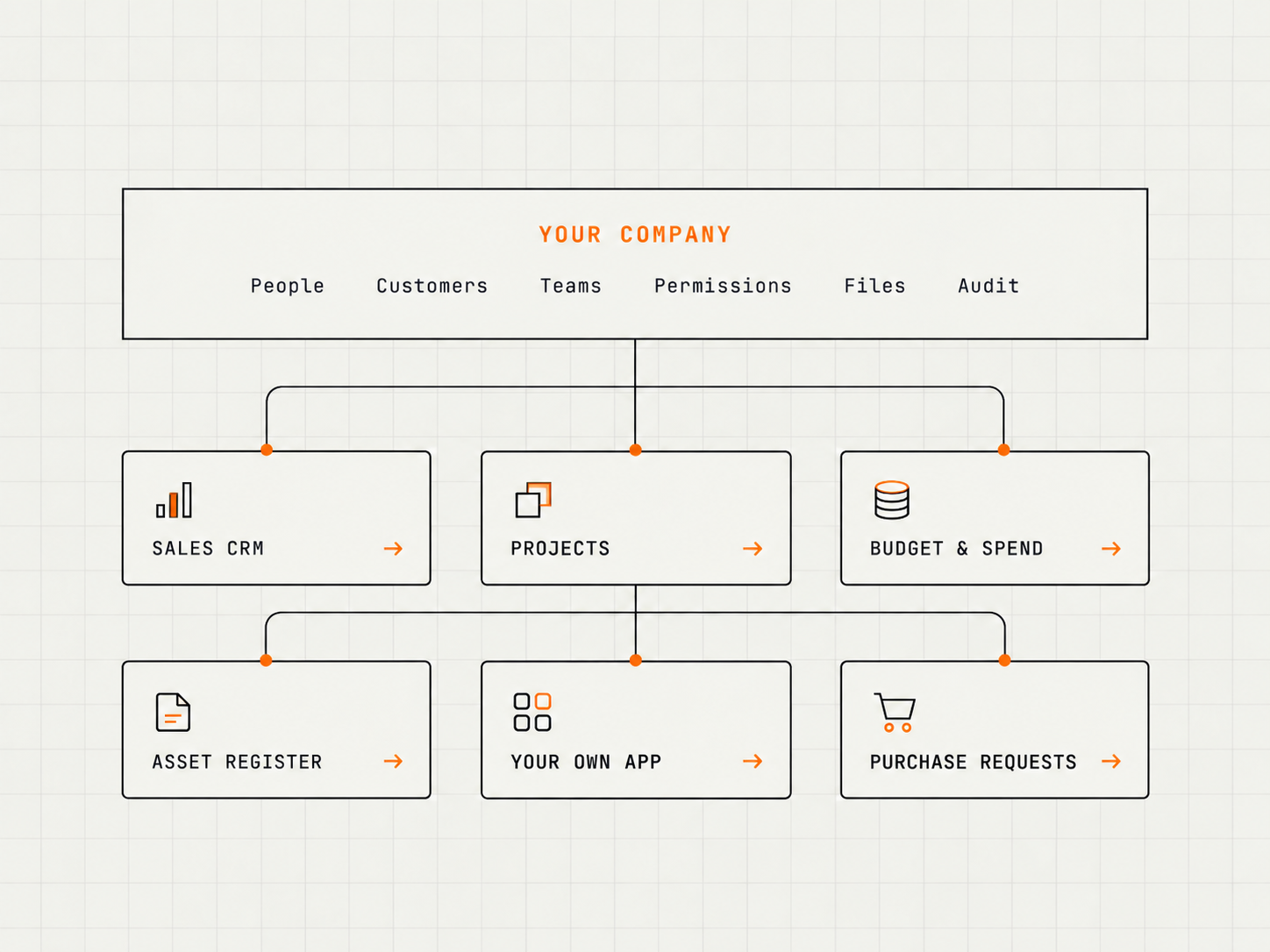
CRM, projects, approvals, time tracking or something completely custom. Install what exists and build what does not. They all run on the same users, permissions and company data. And if you ever want to leave, we'll help you pack. You won't.
Connected business software for growing companies
Describe what your business needs. The app arrives already connected to your company, governed by your security model, aware of your people and organizations, and portable beyond Cordango.
Connected business software for growing companies
Describe what your business needs. Cordango builds the app, connects it to your company, and keeps everything on one governed platform.
You don’t have to start from a blank prompt. Install ready-made apps built by operators, consultants, specialists and other Cordango companies. A ticket system, an asset register, an onboarding flow, ready to run on your own platform.
Creators do not set prices or sell separate subscriptions. You keep paying one Cordango platform price, and Cordango rewards creators when other companies genuinely use what they made. Simple for you, worth doing for them.
Or start from the problem: the business app use cases companies build first, with a real app behind each one.
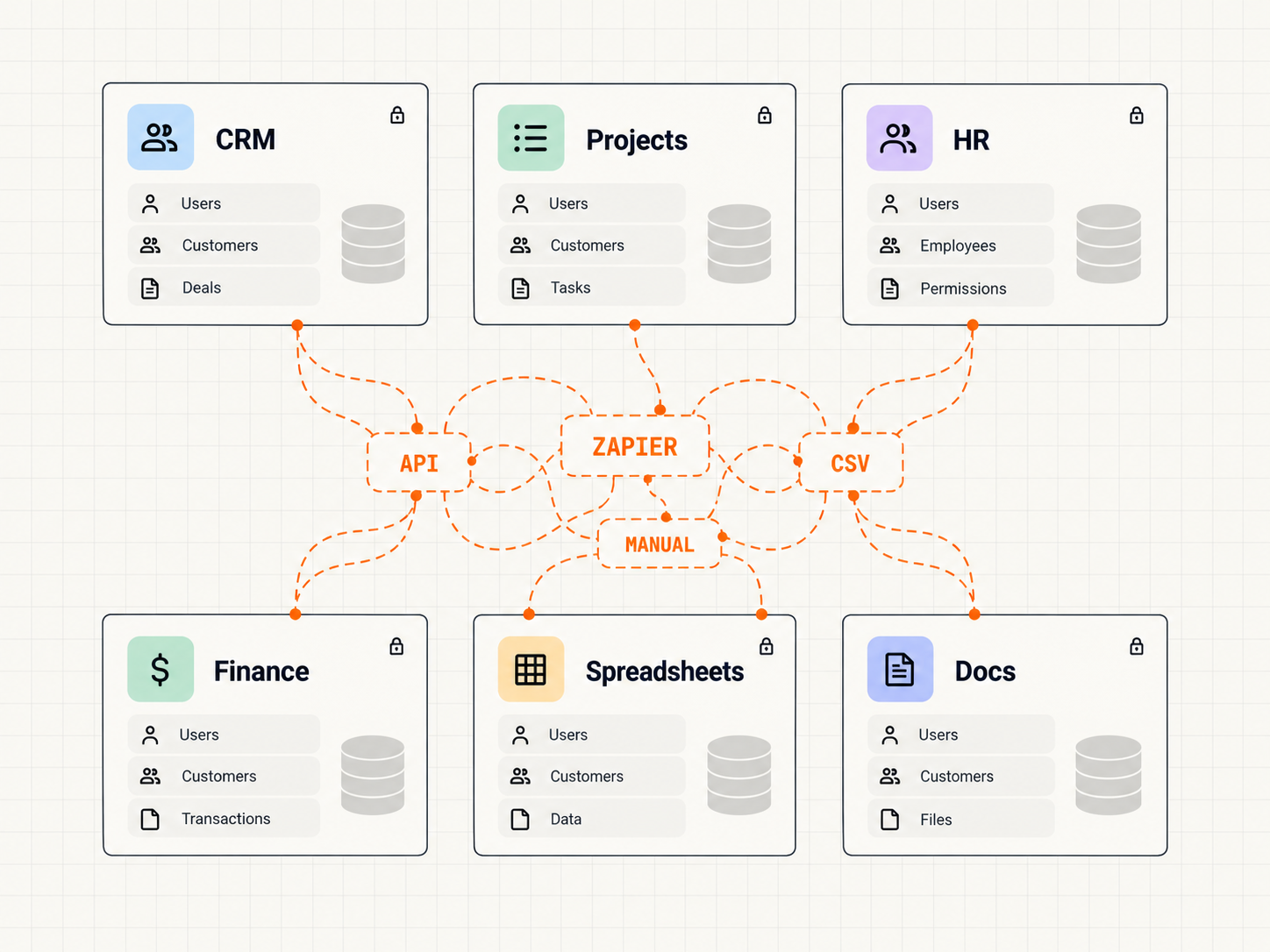
Open a customer and you have the whole picture in front of you: what they do, who you talk to there, the deals in flight, the work being delivered, the invoices out, the tickets open. You stop opening four tools to answer one question about one company.
Their address changes and you fix it once. You are done. Nobody has to go and remember the other three apps, and nobody quietly works from the old version. The same is true of your own people: approve someone’s leave and the project they are on already knows they are away.
What shared company context means →
It is also why there is one home dashboard across everything you run, rather than one per app.
One customer, one record. Every app is looking at it, none of them is holding a copy.
Describe the app in plain words. Cordango asks a few questions to learn how you work, then builds it for you. It comes hosted and secured, with permissions set from your answers, and it lands on the same company data as every app above.
It is built for the person who understands the process, not for someone who has become an expert in an app-building platform. Low-code gives your team the tools to build an app. Cordango gives your team the app.
What that looks like in practice: an internal tools platform instead of five disconnected tools, and a business app builder that starts from your process rather than a schema.
Dante needs your input
You asked for a way to track customer support tickets. What should the app be built around?
This decides the records, the screens and who sees what. You can change it later by asking.
One list of open tickets with status, owner and customer. The team works it top to bottom.
Tickets sit under the company that raised them, so the whole history is on one page.
Need a CRM, a ticket system, a vacation planner? Tell Cordango what you need. It asks a few questions and builds the app, hosted and secured, with permissions sorted.
Somebody has usually solved it before. Browse the ready-made apps other companies published, install one and make it yours. It arrives working, not as a starting point you have to finish.
Some apps are too involved for the generator. Tell us what you need and we build it for you, in days not months. A custom app at a fraction of what custom software used to cost.
However the app arrives, it lands on the same platform, with the same users, permissions, data and governance as everything else you run.
None of the three starts with an empty canvas, and none of them starts a new silo.
Cordango does not only generate an app. A Cordango app is created already connected to the company platform, governed by the company security model, aware of shared company context, and portable beyond Cordango.
Works with other apps, workflows, external systems and agents from the first day, because the interaction surface is part of the app, not something wired on later.
How apps connect →Identity, roles, permissions, audit history and company ownership are already there. Nobody adds governance to an app afterwards.
How governance works →Apps share the same people, organizations, teams, files and calendar. The person in PTO is the person in the CRM and in Projects.
What shared context means →The app is a definition you own. It runs here, or it builds into conventional software that leaves the platform with you, where the generator supports it.
How portability works →Connected means apps can communicate. Contextual means they already understand the same company world. The PTO app and the Projects app both know that Tim is the same person.
Nobody sets up servers or wires permissions. Every app runs on the same foundation: single sign-on, roles and permissions, a real people directory and an audit trail. Hosting, updates and backups are managed, and it runs on German and EU infrastructure.
The important part is ownership. The app belongs to the company, so it does not leave when the person who made it does, and permissions decide who uses it rather than who happens to have the link.
| Admin | Manager | Member | |
|---|---|---|---|
| View customers | ✓ | ✓ | ✓ |
| Edit invoices | ✓ | ✓ | − |
| Manage people | ✓ | − | − |
| Install apps | ✓ | − | − |
People work differently, and forcing one screen on all of them is how you end up with a spreadsheet on the side. In Cordango everyone shapes their own interface: the columns they need, the layout that suits them, their own home dashboard. If a list annoys you, ask for a board.
None of that copies the app, forks the process or creates a second source of truth. The application still belongs to the company, permissions still decide who can use it, and the records underneath stay one set of records. Everyone can work their own way. The company still runs one system.
| Cordango | AI builders | Low-code | Separate SaaS | |
|---|---|---|---|---|
| Anyone can create what they need | ✓ | ✓ | ~ | ✗ |
| Made for people who know the process, not the tool | ✓ | ~ | ✗ | ✓ |
| Shared company context by default | ✓ | ✗ | ~ | ✗ |
| Governance built into every app | ✓ | ✗ | ~ | ~ |
| Company-owned, not personal or builder-owned | ✓ | ✗ | ~ | ✓ |
| Every user shapes their own interface | ✓ | ✗ | ~ | ~ |
| One security model & audit trail | ✓ | ✗ | ~ | ✗ |
| One subscription instead of many | ✓ | ~ | ~ | ✗ |
| AI & MCP across your whole company | ✓ | ✗ | ✗ | ✗ |
| Hosted in Germany, GDPR-first | ✓ | ✗ | ~ | ~ |
✓ native built-in · ~ partial or you assemble it · ✗ not available
AI builders are easy to start and hard to control. Low-code is powerful and complex. Cordango is meant to be easy to build on and safe to operate.
Bring a process that annoys everyone and we will turn it into a working app during the call. About 30 minutes, on a real company platform, with your permissions and your people in it.
Cordango is onboarding early companies now · a handful at a time