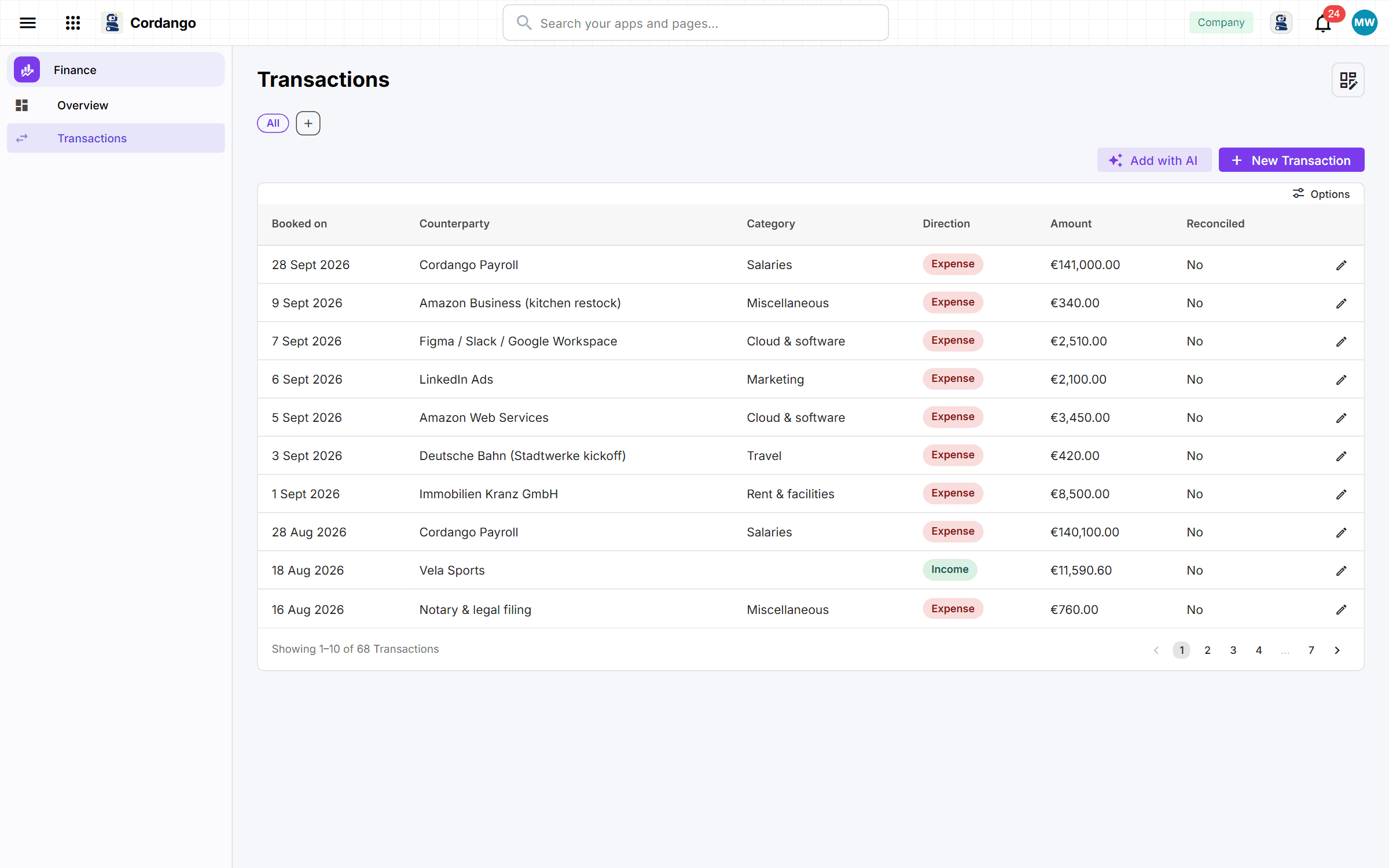
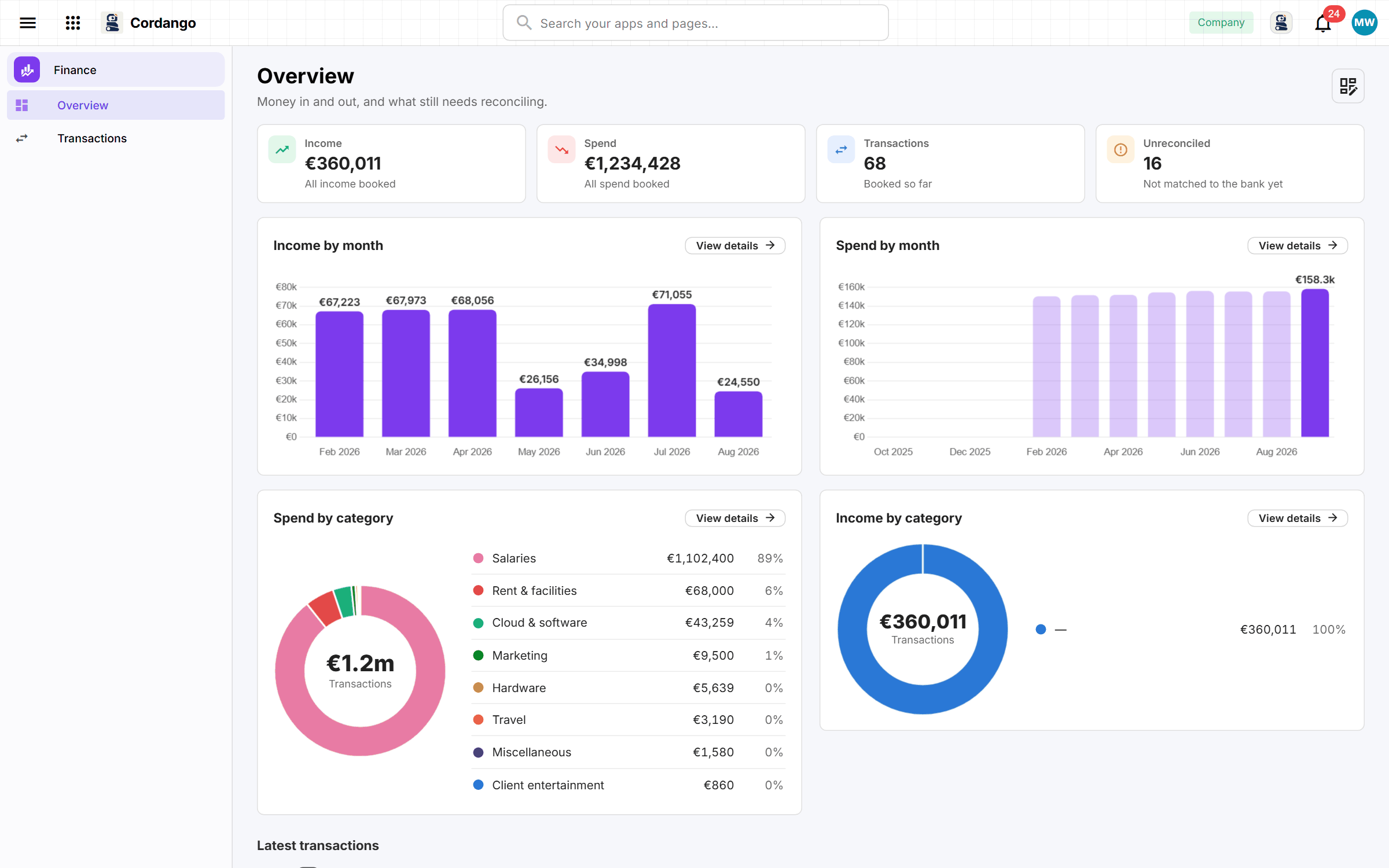
Every transaction goes in once, in or out, with the counterparty, a reference and one of your own categories, so the totals mean something to your company rather than to a chart of accounts. Each category can carry a monthly budget and an owner. Once a line has been checked against the bank statement, mark it reconciled. The overview shows income and spend by month and by category, with the latest transactions underneath.
Use it to
Useful for
This app stands on its own. It uses your shared company data and needs nothing else installed.
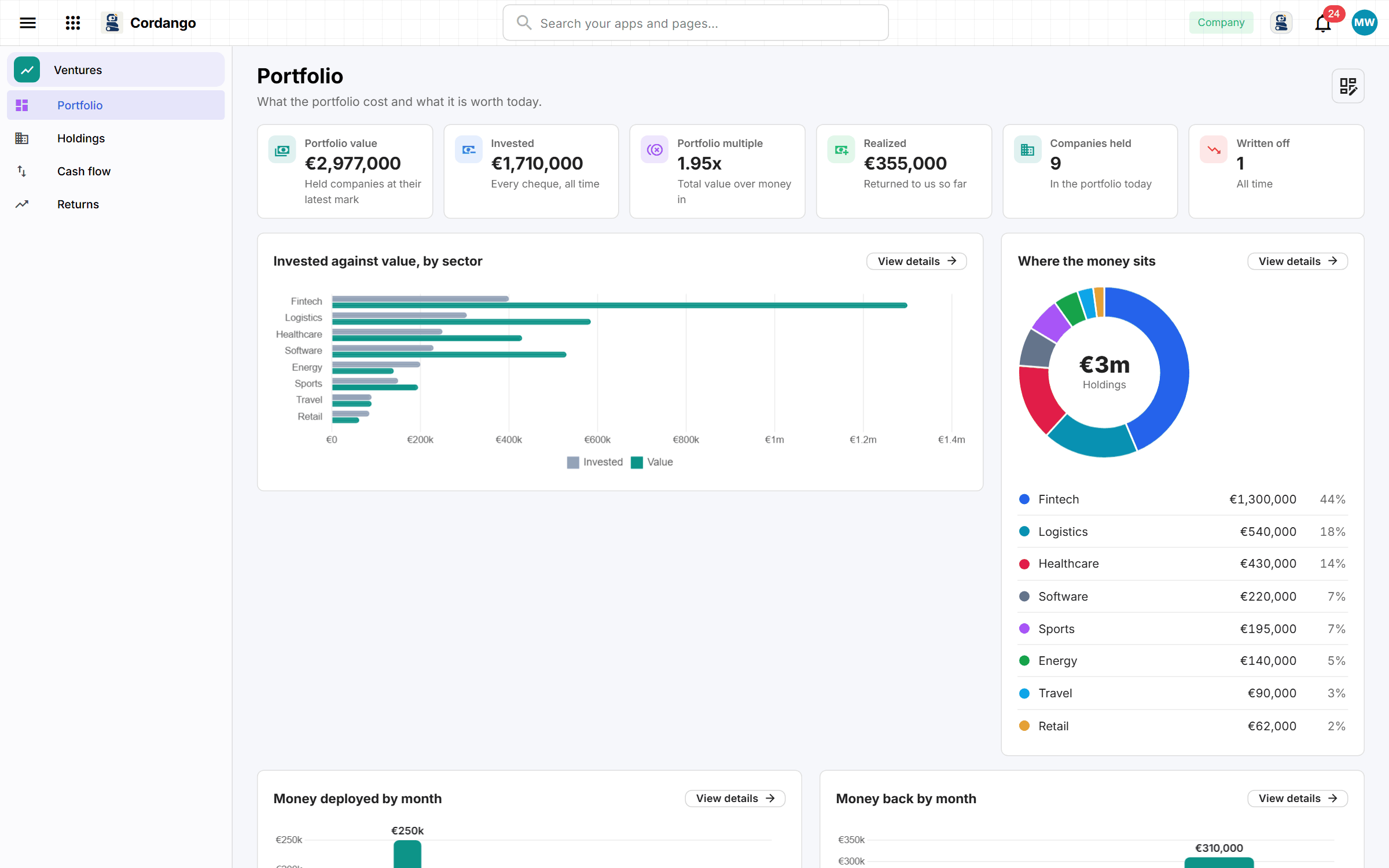
A dozen angel cheques and a spreadsheet that’s a year out of date. Log each cheque, valuation and payout here, and the multiple and return work themselves out.
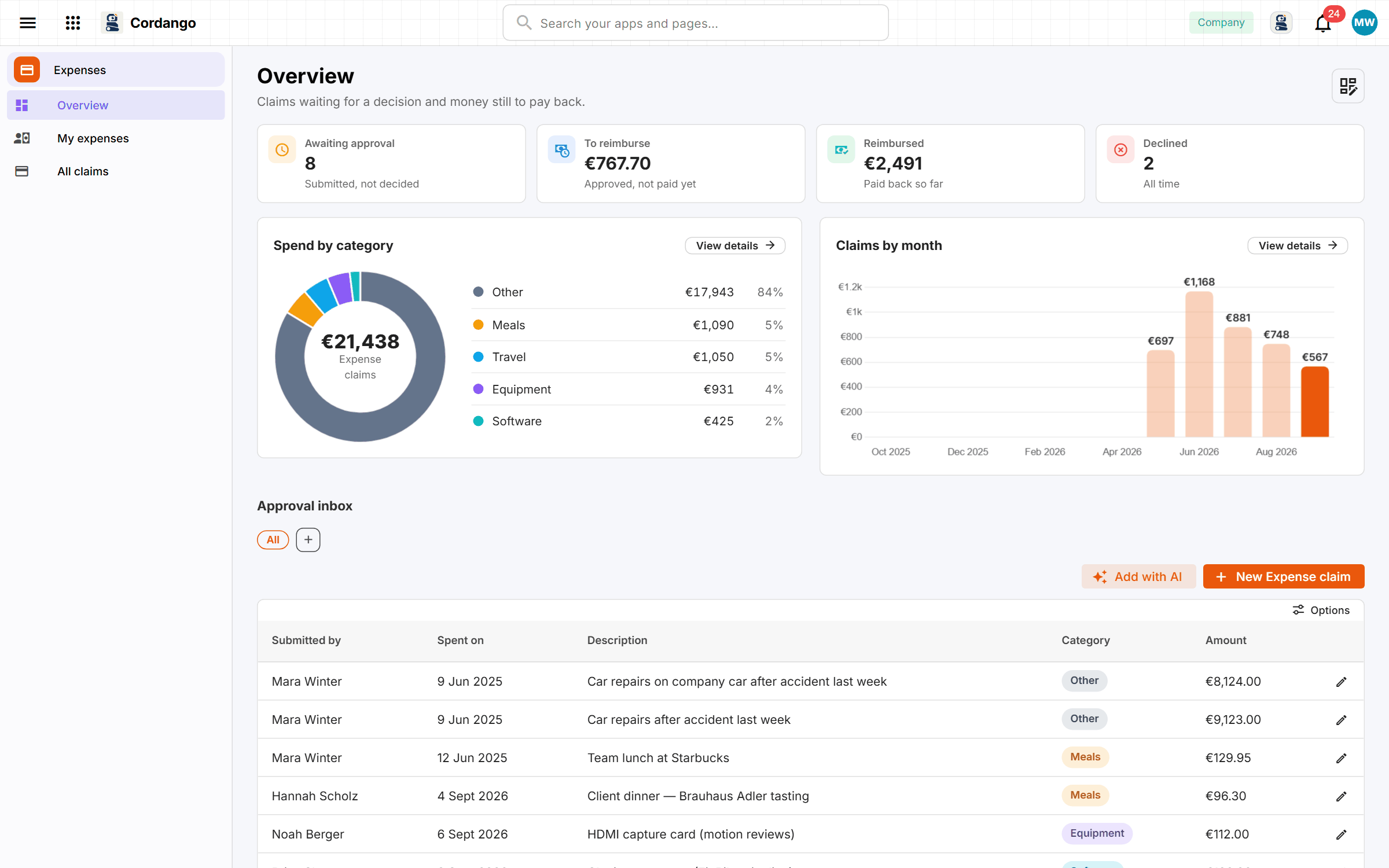
The colleague who paid for the team dinner on their own card files one claim with the receipt, and can see when it’s approved and when they’re paid back.
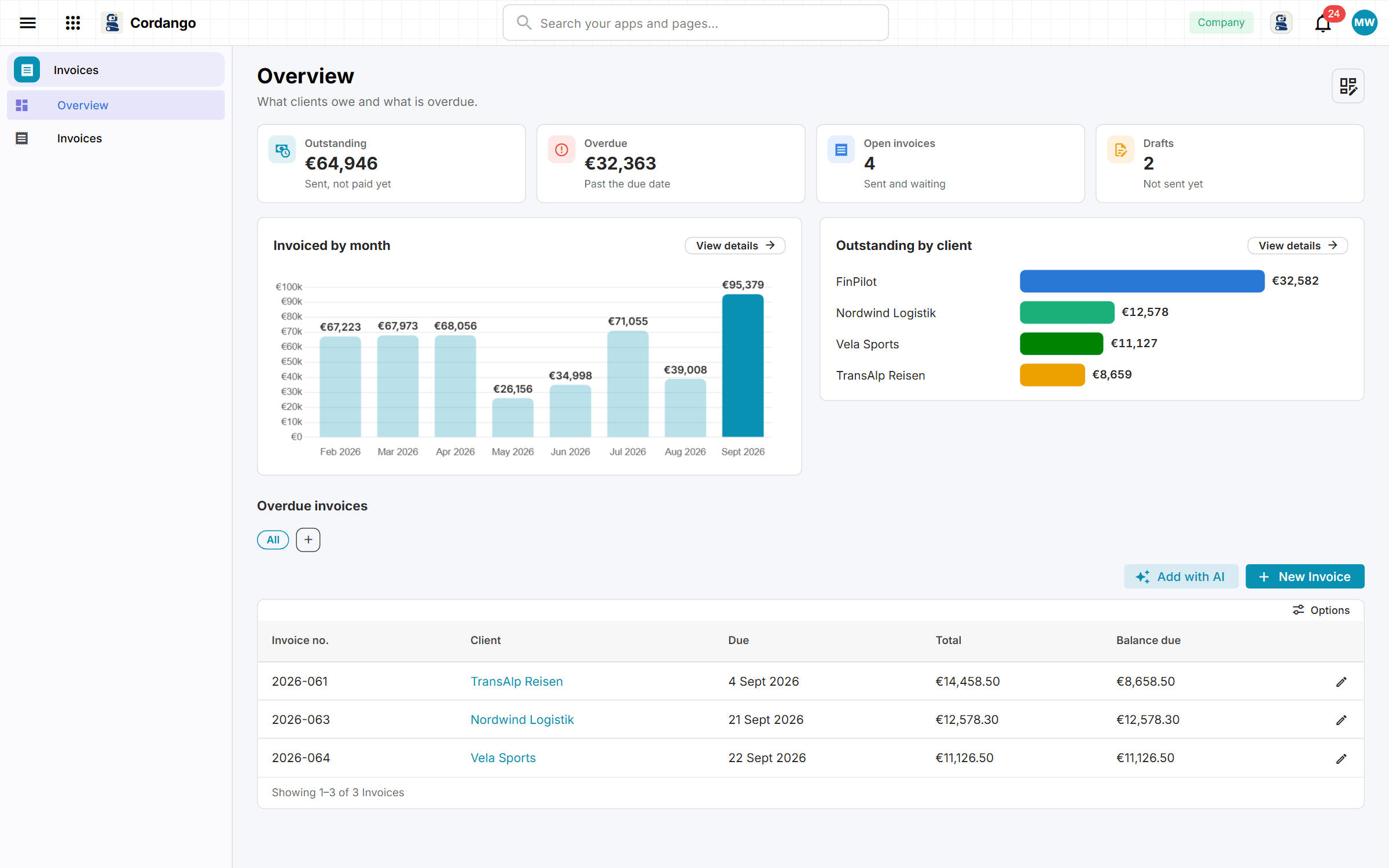
Invoicing for a small agency or consultancy, done by whoever gets stuck with it at month end. Totals add up from the line items, and late ones show how late.
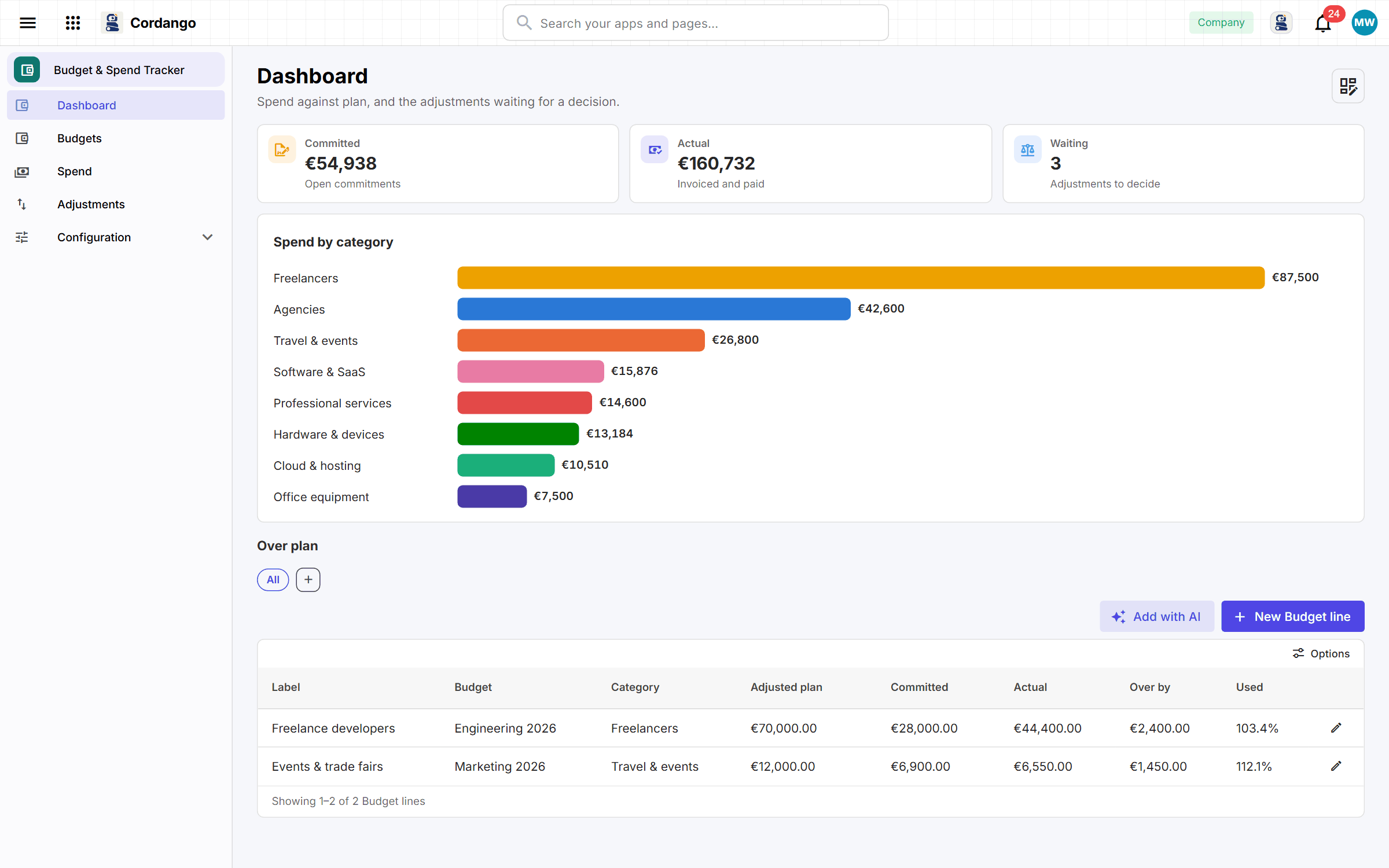
A department head shouldn’t learn at quarter end that the budget is gone. They hear on a Monday instead, because committed money counts before it’s spent.
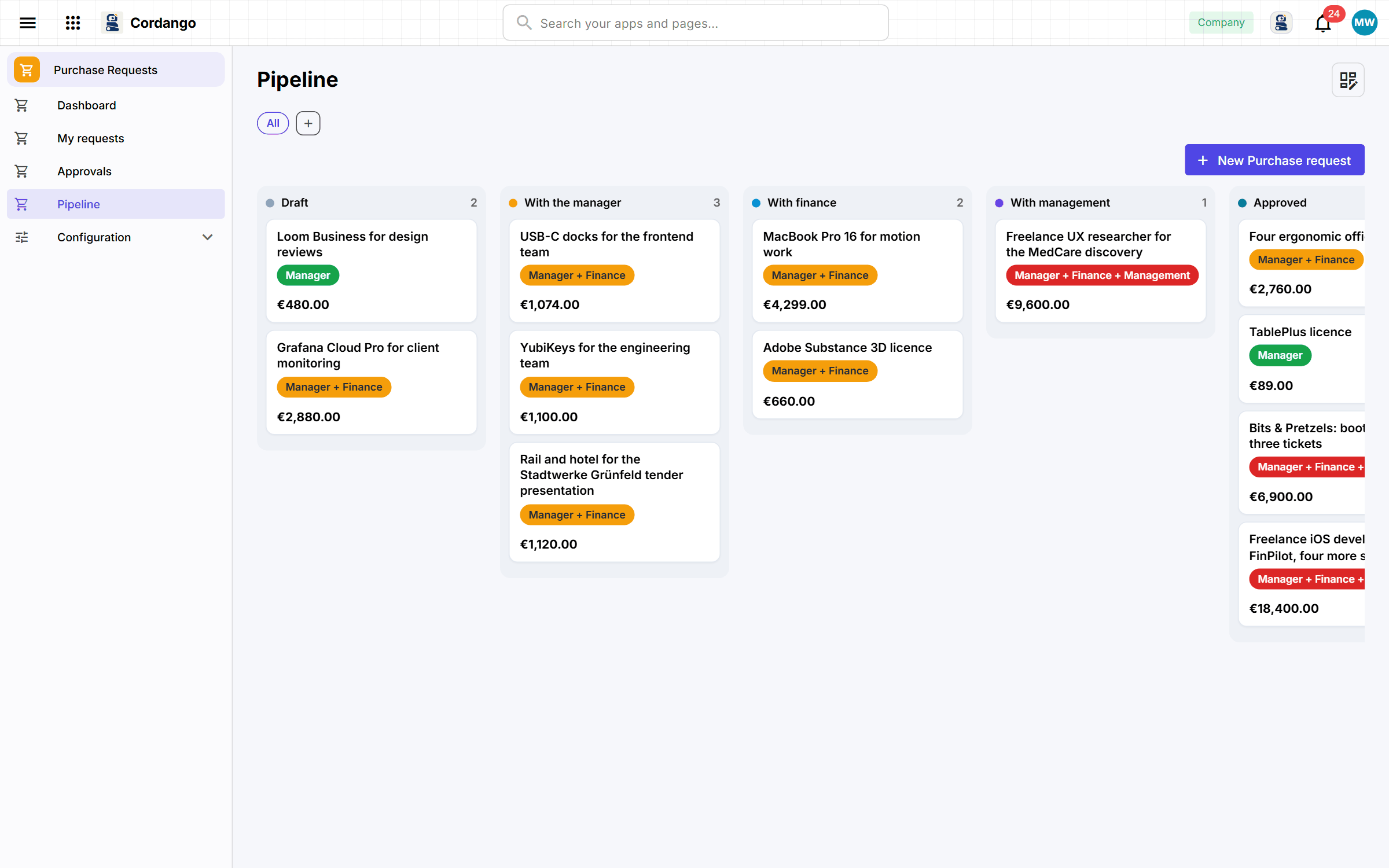
A short form for anybody who needs to buy something, and the amount decides who agrees. A new chair stops at the manager, a new server goes all the way up.
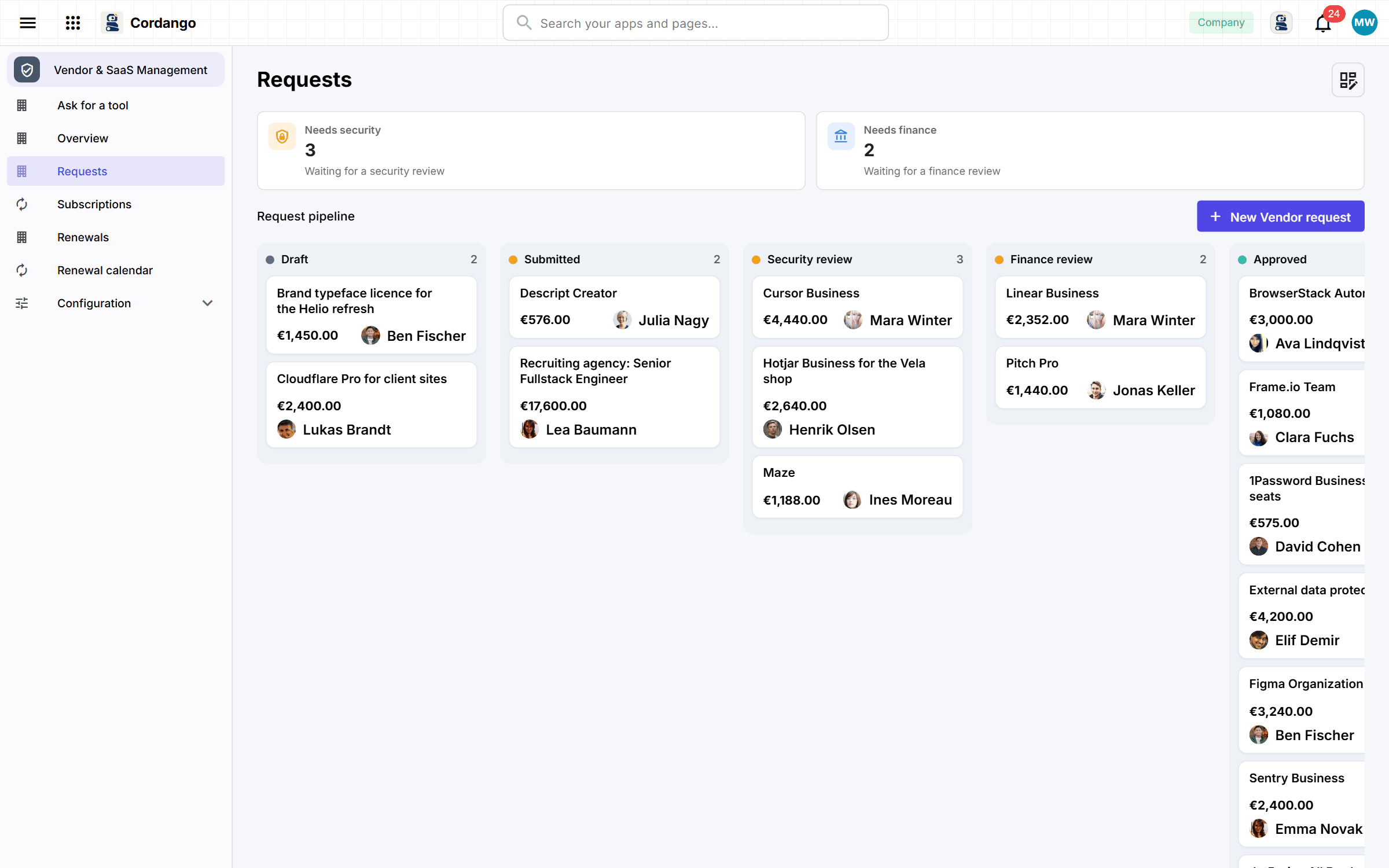
IT usually hears about a new SaaS tool when the invoice arrives. Here the request passes a security review first, and every renewal comes with a warning.
Every app here installs on its own and works on its own. Adding a companion is what makes both do more.