Adding a company starts with a question.
— not a formSomebody types TENTE. That could be the holding company, the operating company that actually makes the castors, or one of a dozen national subsidiaries, and which one it is decides who gets invoiced. So Cordango lists them and lets you point at the right one.
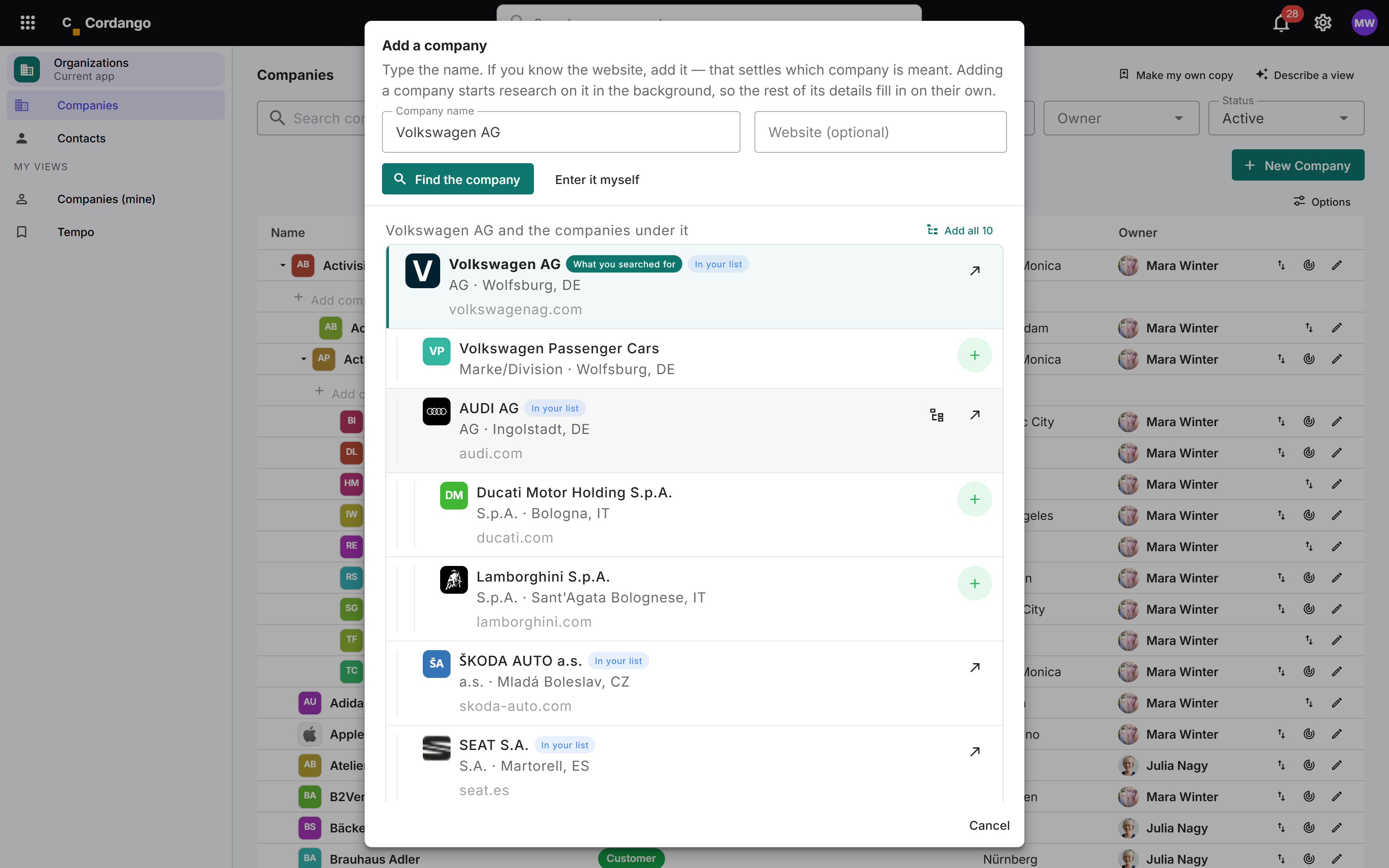
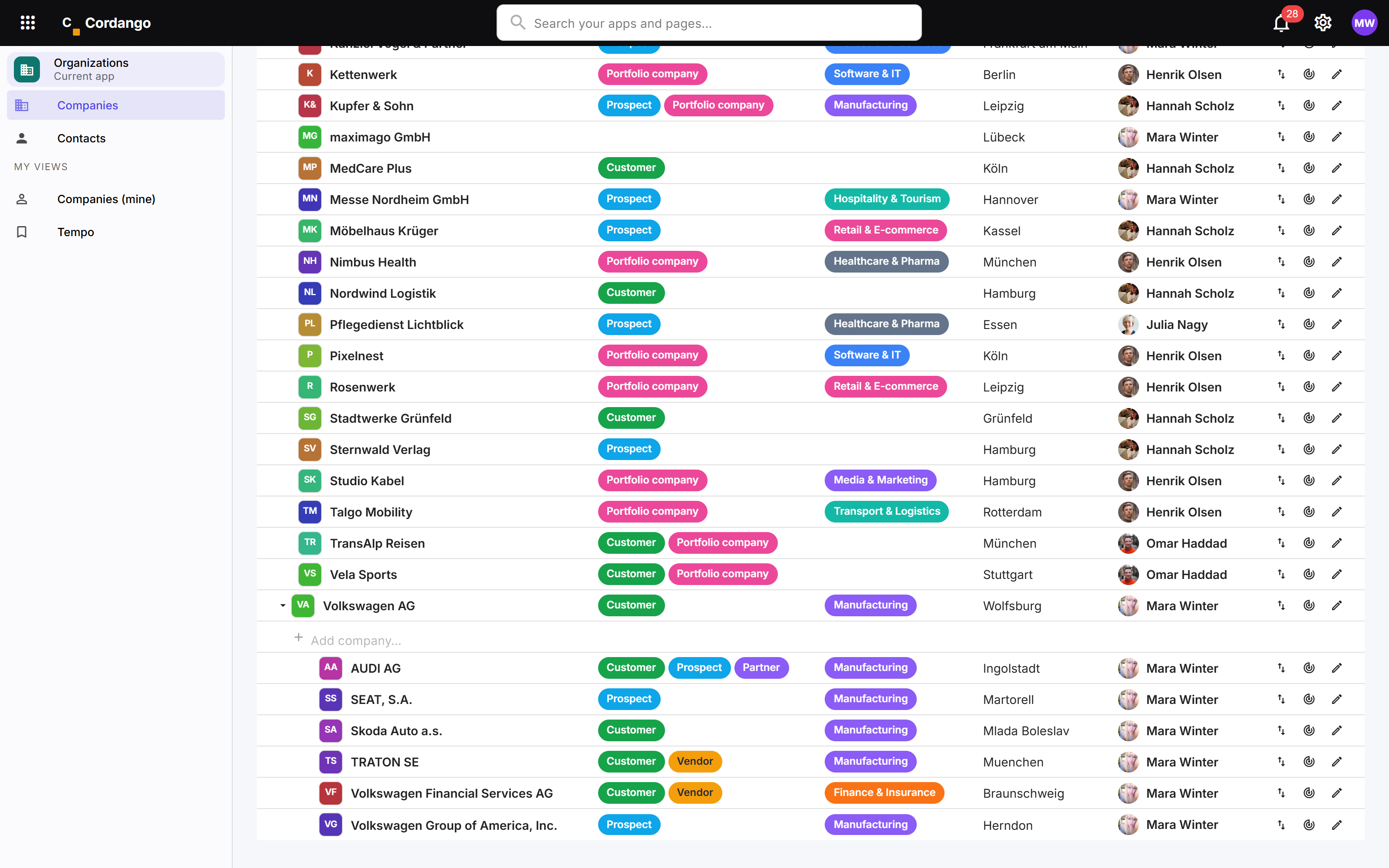
The answer comes back as a tree, because a flat list would lie. Search Porsche and a flat list puts Volkswagen AG and Porsche Automobil Holding SE side by side as if they were two readings of the same name. They are not. One owns the company you searched for and the other owns that, and the shape is what tells you who you are actually dealing with.
A name is never treated as an identity. It is an ambiguous input, which is what it is, and your click is what settles it. What that click supplies is the thing the whole research ladder needs: a domain.
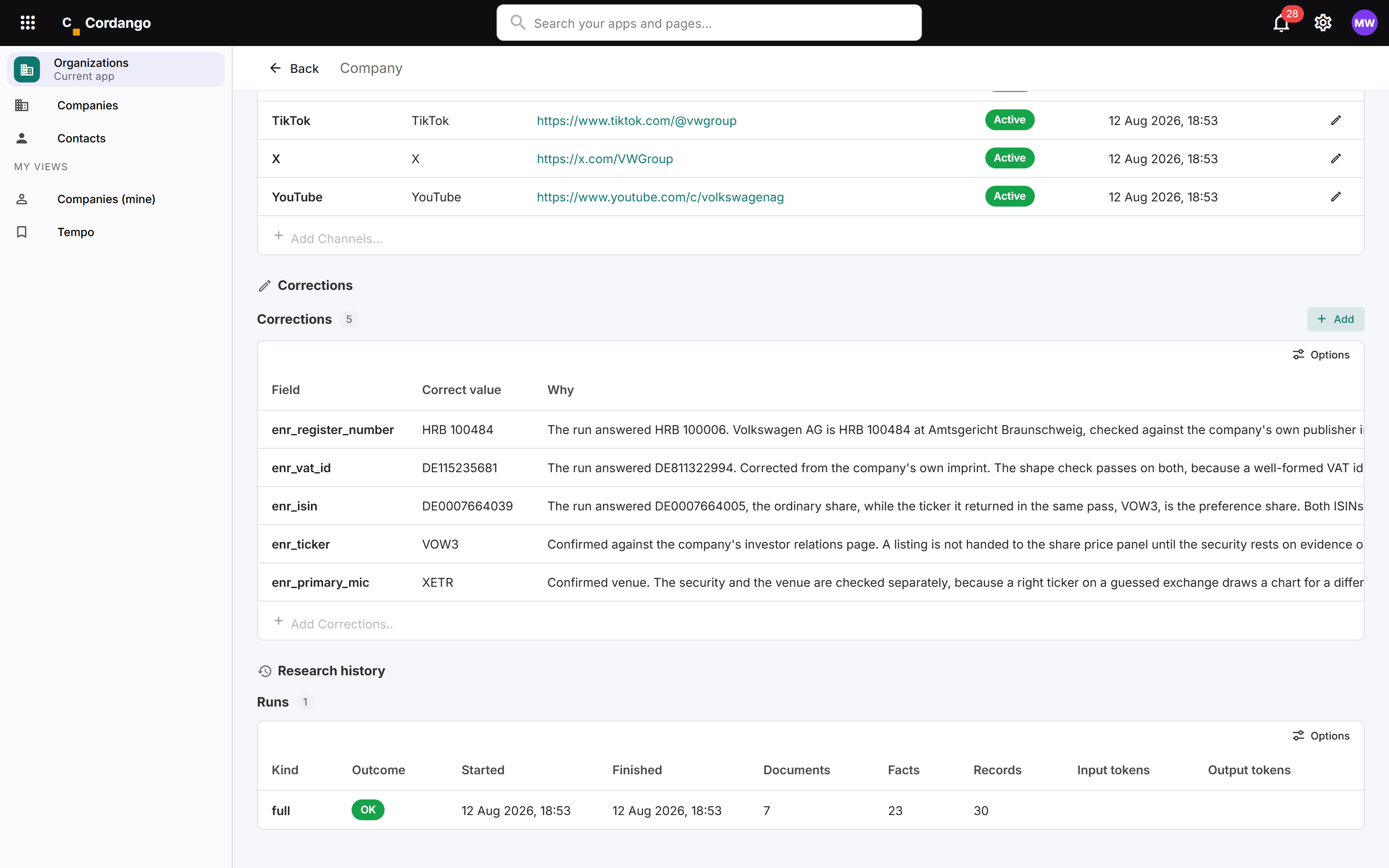
Look at the chips. Four of these are already in this workspace, so the dialog says so and Add all offers the ten that are not. A group is usually added a piece at a time, and without that check the second pass would offer to duplicate the half that landed first.
- TREE Ownership reconstructed from the lookup, drawn as a group
- ALL Add the whole branch at once, parents written before children
- KNOWS Companies you already have are marked, never offered twice
- SAFE One subsidiary that will not validate does not lose the ten after it
- OPT “Enter it myself” is always there, because a lookup will not know every small company