Stop buying software, start operating
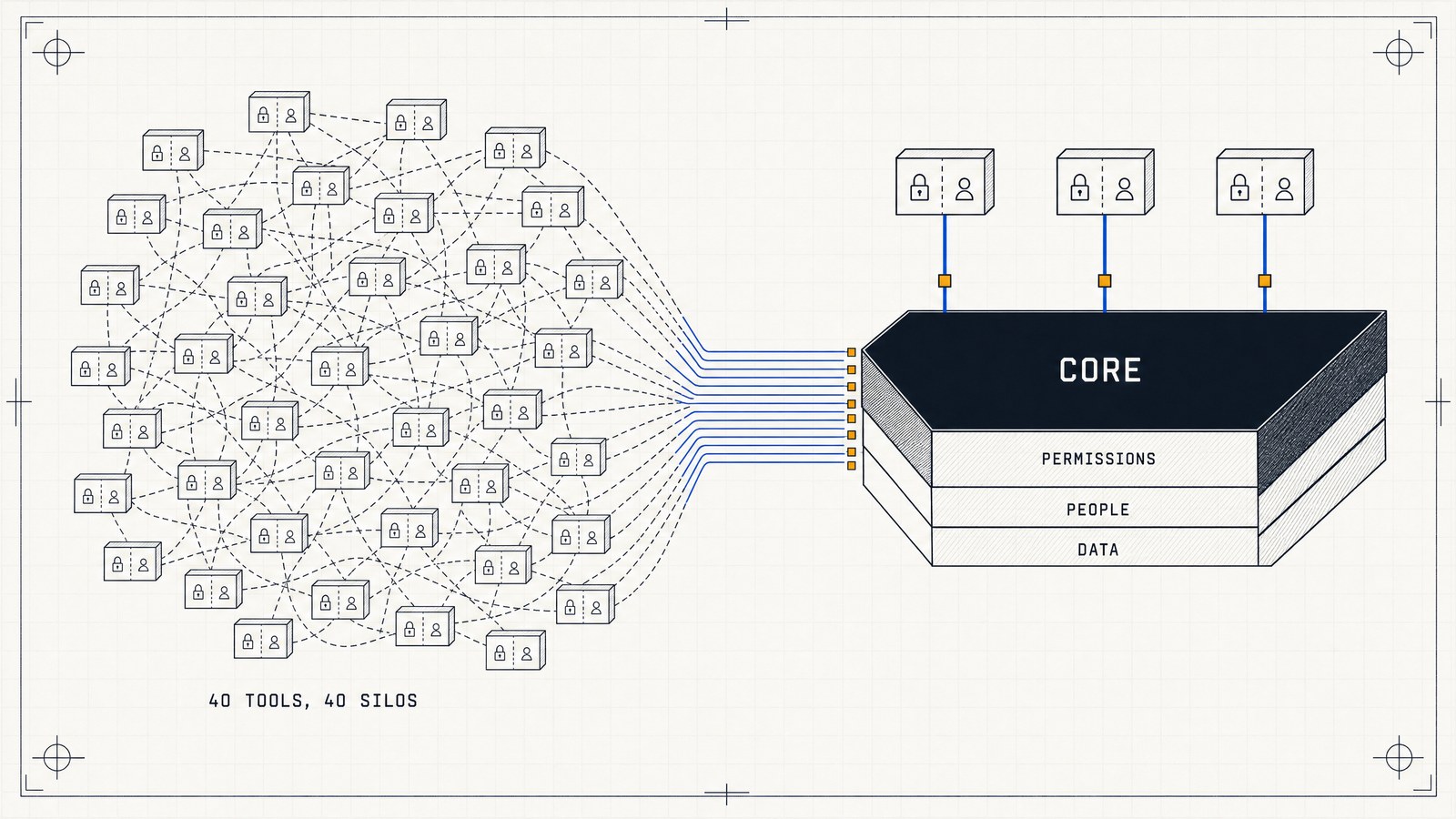
Somewhere around the fifteenth browser tab, you stop counting.
CRM in one. Billing in another. Two spreadsheets that are really the source of truth for half the company. An HR tool nobody opens unless it's payday. A shared drive that works like a filing cabinet with worse search. Every one of them made sense the day someone bought it.
Nobody decided to run the company on 40 disconnected apps. It happened one reasonable purchase at a time.
I used to think the fix was better integrations. Wire everything together, sync the data, done. I was wrong, and it took a few "why is this customer in three systems with three different addresses" mornings to admit it. Integrations don't remove the sprawl. They add a layer of glue you now also have to maintain.
The tools were never the problem
Most of those apps are fine on their own. The problem sits underneath them, in the part you don't see.
Every SaaS product rebuilds the same foundation from scratch. Users. Roles. Permissions. A directory of your people. Some idea of teams. An audit log. An API. So you end up owning that foundation dozens of times over, in dozens of slightly different shapes, and none of them agree with each other.
That's why onboarding a new hire means setting up eight accounts by hand. It's why offboarding means remembering those eight accounts (and why someone always forgets one). It's why your customer list is technically in five places and correct in none.
You didn't buy a sprawl problem. You bought a missing-foundation problem, one purchase at a time.
What if the foundation came first
Turn it around. Instead of every app bringing its own foundation, give the company one and let every app use it.
That's the bet behind Cordango. You get the layer every company needs before you add anything: identity, roles and permissions, your people and teams, your company data, security, hosting. EU-hosted, with an audit trail over the lot.
Then you add apps on top. A CRM. Invoices. Assets. Onboarding. From a template, tuned to how you work, or custom-built by us. Because they all sit on the same foundation, they share the same customers, the same people, the same permissions, without you doing anything.
One record, every app, nothing to integrate.
The part AI made urgent
Two things changed recently.
Building an app got cheap. What used to be a quarter of engineering time is a template and an afternoon now. The hard part moved from "can we build it" to "can we connect it to everything else without opening a security hole," which is the exact part sprawl makes impossible.
And AI made the disconnection expensive. An assistant is only as useful as what it can see. Point it at one silo and it answers one silo's questions. Give it a company with a single shared data model, reachable over MCP and a clean API, always inside each person's permissions, and it can reason across the whole business. Which trial customers are overdue. Who owns them. What's at risk this week. One answer, pulled from many apps.
You don't get there by buying another tool. You get there by changing what the tools stand on.
Where to start
If your company is holding a dozen tools together with tape, the honest first step is to see it working. We'll stand up a company, add a couple of apps that share data, and point AI at the whole thing, in about half an hour.
Book a demo and we'll show you the other way to run it.
See Cordango in your own company
The fastest way to understand it is to watch it stand up a company and add an app live.
Sign up →Related posts
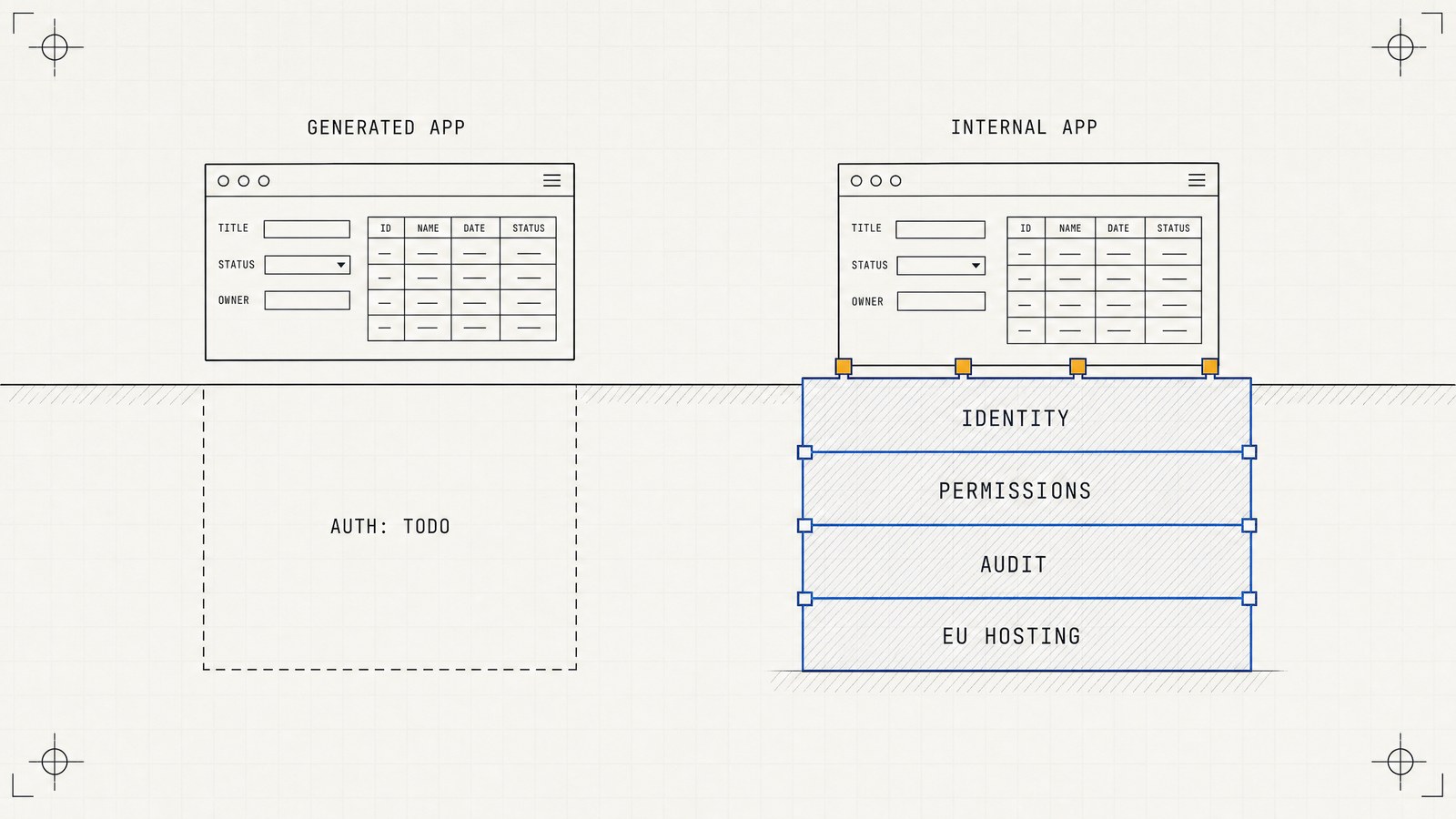
Purpose-Built Beats Half-Built
Low-code promised working apps without developers. Most companies got a canvas, a license calculator, and a flow only one person understands. AI app builders fix the wrong half.
Read →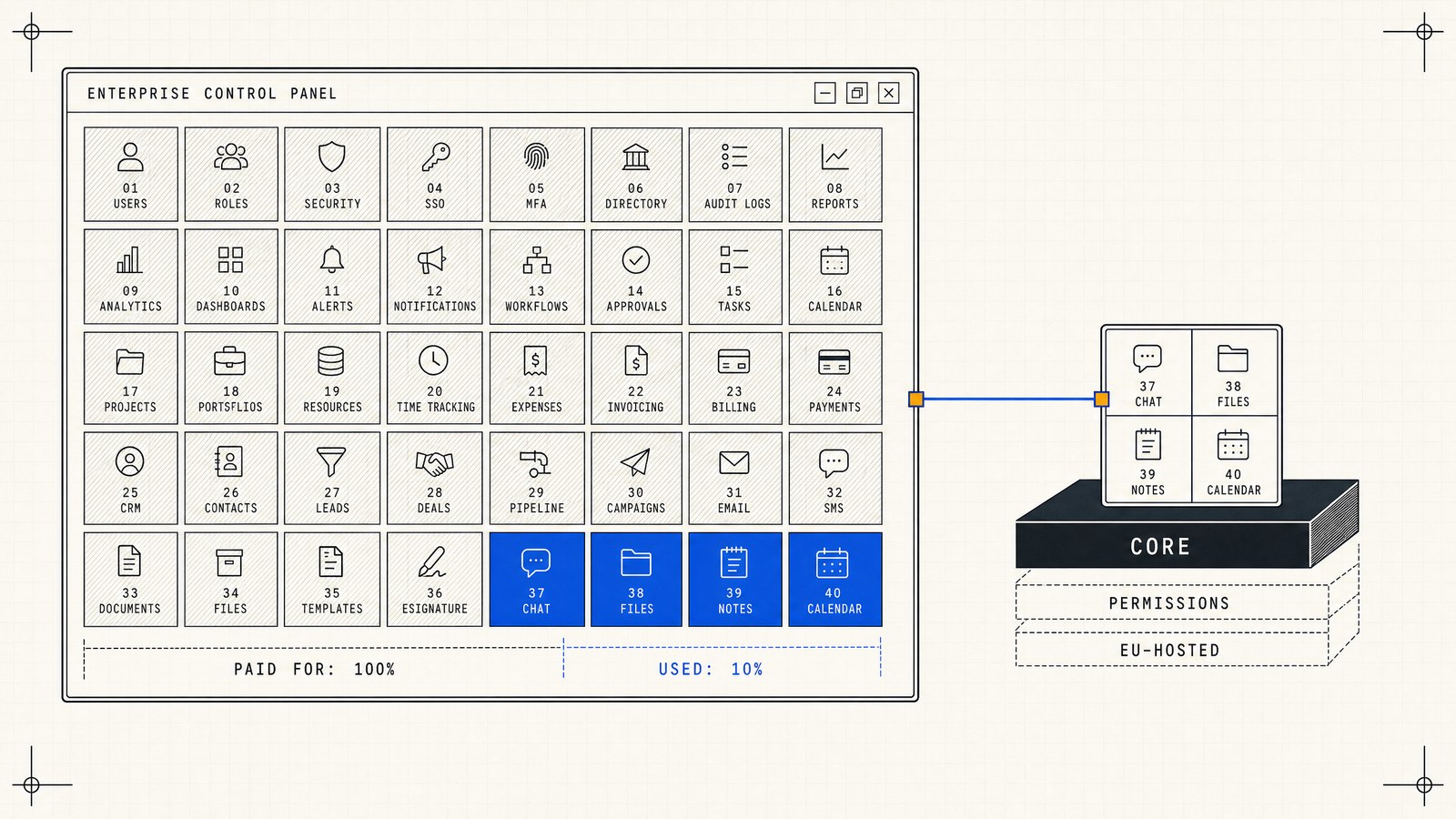
Paying 100% for the 10% You Use
Most tools in your stack get used for one or two things and billed like you use all sixty. There is a way to buy only the part you actually need.
Read →