Paying 100% for the 10% You Use
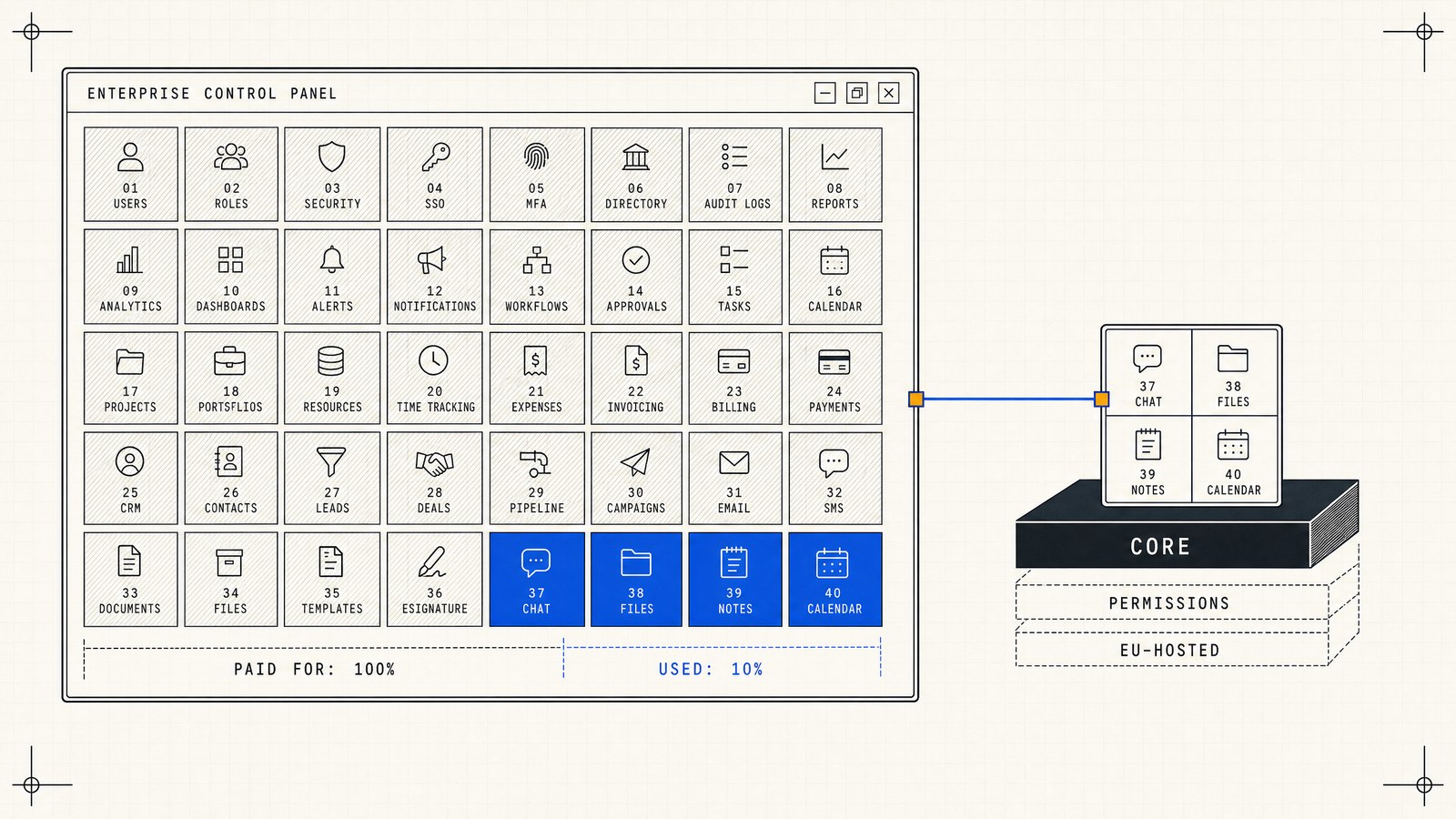
A renewal email landed last month for a tool I won't name. Four figures a year. Before approving it I opened the product to check what we actually do in there, and the answer was one board and a comment thread. The tool has somewhere around sixty features. We use it as a list with colors.
You have this too. The survey tool that sends one form a quarter. The project suite where nobody has ever opened the Gantt view. The "platform" that got bought for its automation engine, which nobody has touched since the trial.
Nobody plans this. It happens because software is bought off a feature checklist and used off a habit.
Built for someone else's checklist
Tools grow features because features win deals. The comparison table needs more checkmarks than the competitor's, the biggest prospect in the pipeline needs that one enterprise workflow, and so the product grows. None of that has anything to do with what your team does on a Tuesday.
The numbers back up what you already suspect. When Pendo measured real usage across cloud software, around 80% of features turned out to be rarely or never used. Anyone who has watched a colleague work has seen it live: two screens they know cold, fifty menus they have never opened.
For a long time I thought we were the problem. Underusing the tool, skipping the onboarding webinar, too lazy to set up the automations. We even booked a training session for one of these products once. People showed up, nodded, and went right back to using it as a list with colors. That was the day I stopped blaming us. The other 90% was never for us. It was for the checklist.
What the unused part costs
The 90% you don't use doesn't sit there quietly.
- You pay for it. Per-seat prices are set by the power features, not by your board and comment thread.
- You navigate around it every day, because the interface is built for all sixty features and you need two.
- Every new hire learns to ignore the same fifty menus (we put "which parts of the tool we actually use" into an onboarding doc once, which should have been the moment we noticed).
- And someone has to govern all of it. Every feature is configuration, permissions and attack surface, including the ones nobody opens.
That last one is the quiet one. Your security review covers the whole product, not your 10% of it.
Buying the 10% instead
Here is the other way. You describe the part you actually need. A board for support tickets, comments on each card, three statuses, managers see everything, the team sees their own. Cordango asks a few questions and builds exactly that app. Not that app plus fifty menus. That app.
It runs on a core that is already secure: your users, roles and permissions, an audit trail, EU hosting, GDPR handled. There is no feature tour, because there is no other 90% to tour. And when your process changes, you don't wait for a vendor roadmap or a workaround. You describe the change and the app follows.
If the 10% you need is genuinely complex, we build it with you, custom, on the same core. The point is not that your needs are small. The point is that they are yours, and the tool should match them instead of a checklist.
Some products earn their whole surface, to be fair. Payroll gets used to the last field, accounting too. Keep those. This is about the shelf of subscriptions that each do one job for you and bill for sixty.
The next renewal email
When it lands, do the thing I did: open the tool and count what your team actually touches. If the answer fits in one sentence, that sentence is a Cordango prompt. Book a demo, bring the sentence, and we'll build it in front of you.
See Cordango in your own company
The fastest way to understand it is to watch it stand up a company and add an app live.
Sign up →Related posts
Why We Don't Have Feature Tiers
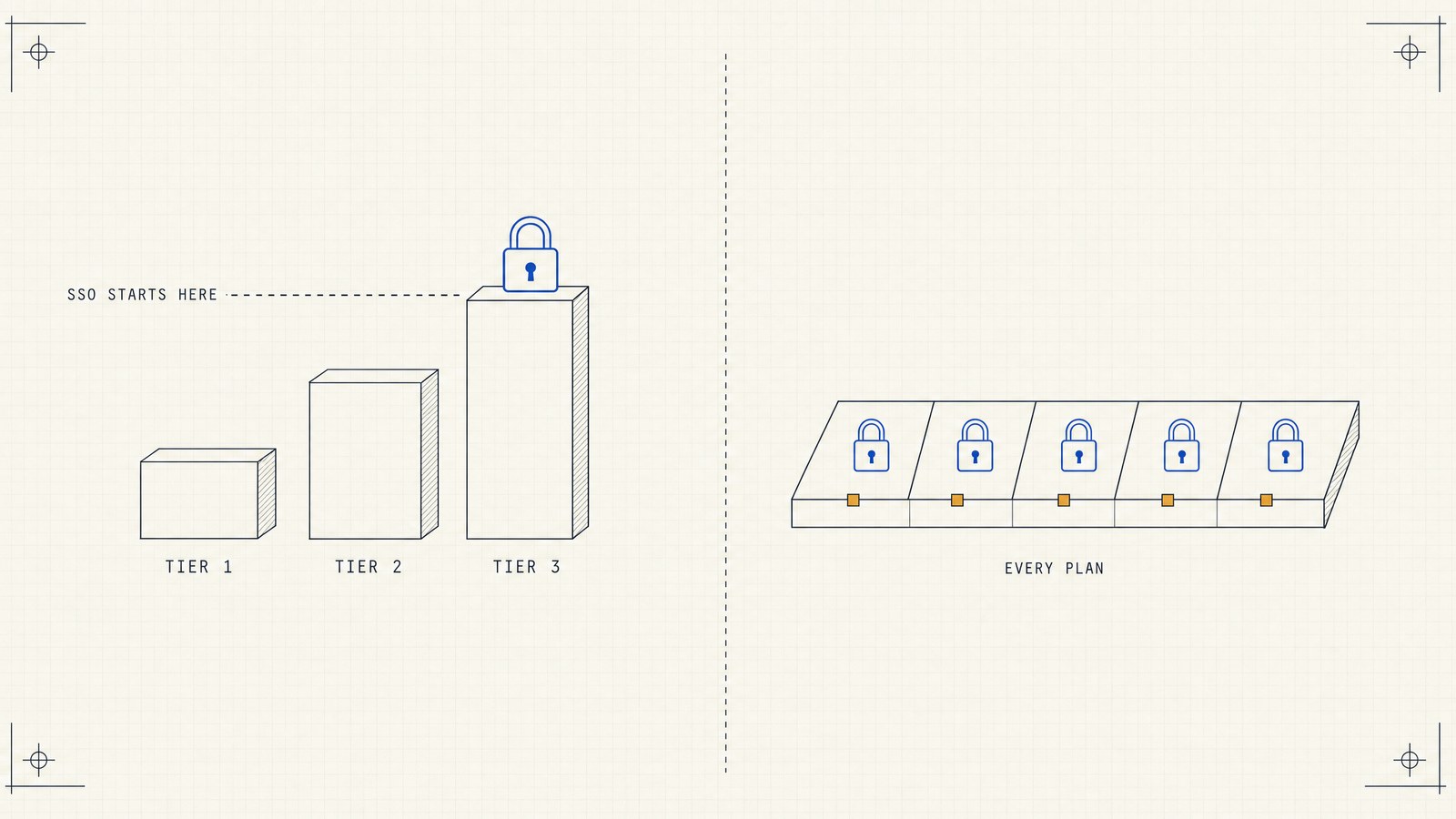
A five-person company pays the same for single sign-on, audit history and real permissions as a five-hundred-person one: nothing extra. Not because we are generous, but because the reason those things sat behind an upgrade button stopped being true.
Read →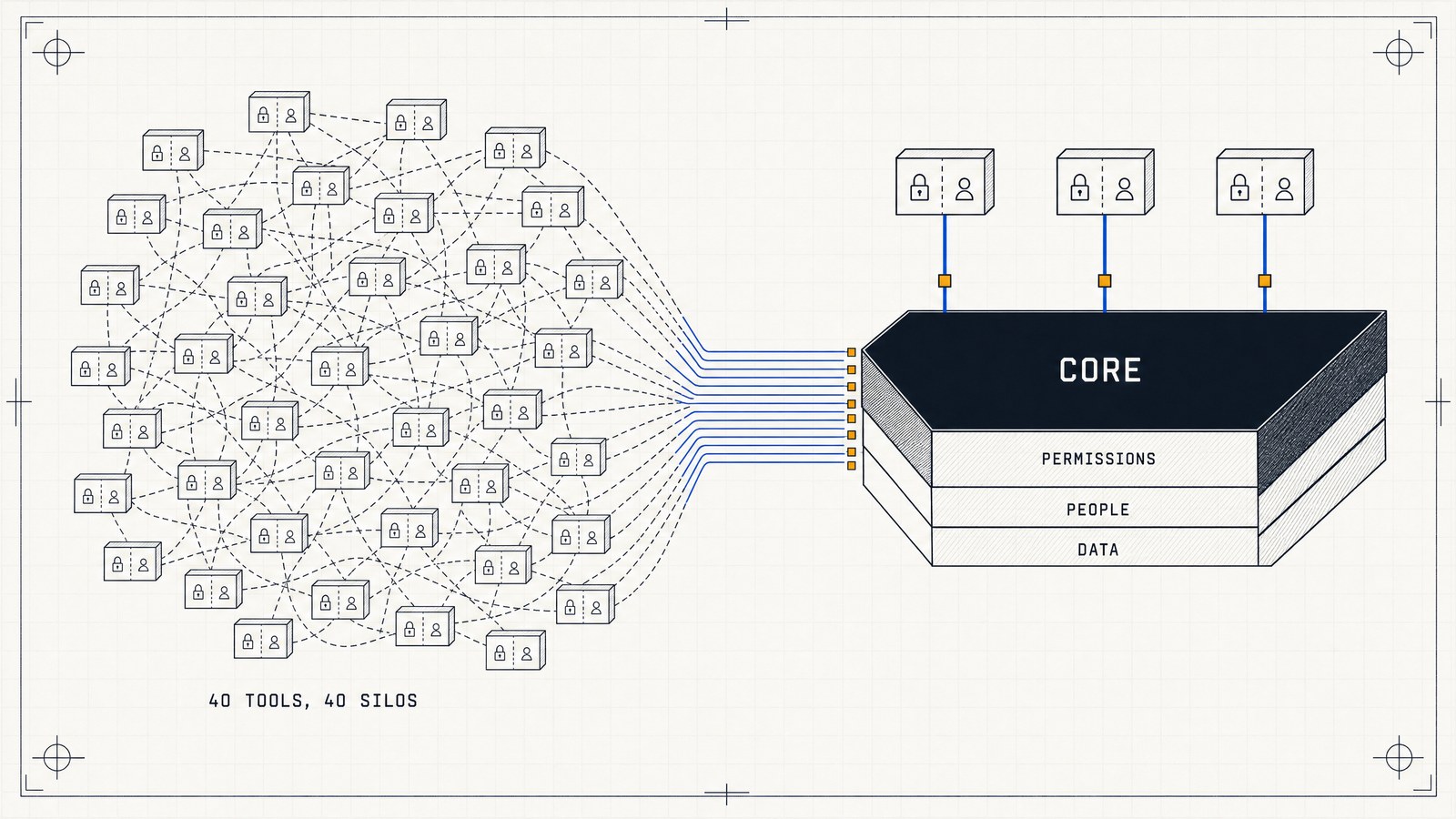
Stop buying software, start operating
Every company ends up running on dozens of disconnected tools. The tools aren't the problem. What's missing is the shared foundation underneath them.
Read →